American nuclear expert presents at South Bruce CLC meeting
At the December virtual meeting of the South Bruce Community Liaison Committee (CLC), the community and committee members received an educational presentation from
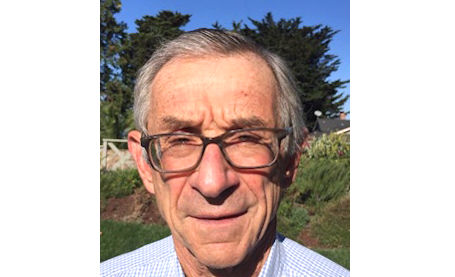
Tom Isaacs (above), lead advisor on the Blue Ribbon Commission on America’s Nuclear Future.
Currently, Isaacs is the chairman of an experts team, advising the San Onofre Nuclear Generating Station in the United States, and is a senior advisor to the Nuclear Threat Initiative. He has a Masters in Engineering and Applied Physics from Harvard University.
With his experience in those and other advisory roles, the focus of his presentation was on nuclear waste programs from around the world; evaluating their strengths and weaknesses, as well as the key elements of a well-rounded approach.
Isaacs began with an overview of high-level radioactive waste - the ways in which it is handled and the challenges of managing it, such as the great time frame, as well as the stigma and fears. He also explained several reasons for needing to solve the challenge of nuclear waste, naming the ethical obligation, safety, security, non-proliferation, credibility of the nuclear community, and climate change factors.
On the matter of hosting a nuclear waste project, he said, “It is a decision to be made by the leaders and the community” and added that those involved should be wary of “other people (who) come along and try to convince you one way or the other.” He stated his belief that “it’s a decision that needs to be made with the implementing organizations.”
Afterwards, he highlighted that there are not only several scientific disciplines involved with the management of nuclear waste, but also non-technical and social elements, such as public engagement, socio-economics and sustainability, that must be considered.
He said that key features of a socially-acceptable approach in a nuclear waste program would include open and transparent decision-making, adaptability, and having a willing, informed, and engaged host partner. He elaborated that it is best to take time to go through the process carefully, recognizing and weighing societal and technical considerations.
The slideshow used during his presentation can be found on-line in the CLC’s December agenda package at:
clcinfo.ca/southbruce/meetings/.
Following Isaacs’ presentation, questions were asked by several of the CLC members.
Ben Ireland referred to concerns of nuclear proliferation, in the context of the current above-ground storage of waste and sought Isaacs’ insight. Isaacs acknowledged this concern and explained that nuclear waste is safe where it is right now, but it would be safer, and smarter, to store it in a Deep Geological Repository (DGR).
One community question referred to the buffer zones surrounding the Yucca Mountain and New Mexico sites in the United States, in contrast to the proposed Teeswater site near a town and beneath a river; questioning the safety in this regard.
Isaacs noted that there are communities quite close to said facilities in the United States and added that in any scenario, there needs to be proof of isolation. This means a compelling demonstration that the waste will be isolated; otherwise, it would not be licensed or sited.
Additional questions from the community were forwarded to Isaacs for his response, which will be published on the “Community Questions and Answers” page of the CLC website.
Each month, the CLC welcomes educational presentations at its meetings, to discuss particular subject matter and offer knowledge in relation to the Nuclear Waste Management Organization (NWMO)’s Adaptive Phased Management site-selection process.
This was the final CLC meeting of 2020. The next meeting will be held Feb. 4, 2021, at 7 p.m., via Zoom and over the phone.
 Written By
No bio for this author.



Related Stories
No related stories.