Specialist devastated at being turned down by Kincardine council
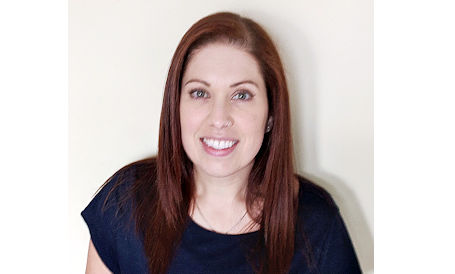
Dr. Bailey Dyck (above) was hoping to make Kincardine her home.
From Sarnia originally, the 36-year-old was just finishing her specialist training to become a rheumatologist, and was planning to join her husband, Adam Gavey, who was living in Kincardine and working at Bruce Power.
Dyck was recruited last spring by then-physician recruiter, Peggy Zeppieri, and an incentive package was developed, similar to one that brought surgeon Dr. Michael Gora to Kincardine about a decade ago.
“I reached out to Peggy (Zeppieri) when I was in my first year of rheumatology in Kingston,” said Dyck. “We did a recruitment package and I considered both Port Elgin and Kincardine. I decided to go with Kincardine because Adam was living there, and I planned to join the medical team when I graduated my specialist training in June, 2020.”
Due to the COVID-19 (Coronavirus) pandemic, it wasn’t until April, 2020, that Kincardine council met in closed session and decided it was not interested in pursuing her recruitment.
“I was devastated,” said Dyck. “I had moved here. My husband and I purchased a house here.”
She said questions were raised, so a second evaluation was set up in May. However, council again turned down her recruitment, but gave no reasons why, leaving her without any real closure.
Dyck said she understood that the incentive packages were for family physicians, but she is not licensed to be a general practitioner. She is an internist.
She offered to do inpatient work at the Kincardine hospital, and was even scheduled to take on shifts, beginning Canada Day.
“I also have the expertise to run an ICU (Intensive Care Unit), if needed” she said. “I can do internal medicine at the hospital, and outpatient rheumatology work at the clinic.”
Zeppieri said that while she realized the successful joint physician recruitment program was focused on bringing family physicians to the communities of Saugeen Shores and Kincardine, when presented with an opportunity to bring a rheumatologist to Kincardine, she felt obligated to present this to council.
“It is unfortunate the incentive package was not approved,” she said. “It is my opinion that the more health-care-related resources within a community, the better chance this will help stimulate physicians relocating there.”
Dyck said that Zeppieri approached Saugeen Shores, on her behalf, and the town offered a smaller recruitment package, but “it was too little, too late, and I was already in Kincardine.”
Throughout the summer, Dyck travelled to various locations, including Kingston and Lindsay, for work. She said she tried to get a spot at the Hawthorne Community Clinic in Kincardine, but got nowhere with negotiations, so she joined Dr. Michael Ballantine at his clinic in downtown Kincardine, opening her practice in October.
“The community was so friendly and welcoming,” said Dyck. “I’m declared an essential service so I didn’t have to close due to the pandemic, but it was still really tough to get my practice up and running.”
She did the traditional practice announcement, letting doctors in the area know that she was in business so they could send referrals her way, rather than to larger centres.
“I was seeing about 250 patients, but I struggled to work two days a week,” she said. “I was waiting to see what happened with the pandemic. I sort of limped along, working in other places, including Kingston.”
However, her practice hasn’t grown fast enough, and she has received an offer to work in a rheumatology clinic in Kingston. Her last day in Kincardine is June 17.
“Kincardine was my first community practice,” said Dyck. “I had a dream of building it up, of being the first specialist in the area, and inviting others to join me here. Instead, I’m referring my patients to rhueumatologists in Owen Sound and other larger centres.”
Her husband said he was surprised that Kincardine council turned down Dyck’s recruitment package.
“We were hoping to live and work in Kincardine,” he said. “I hope I can keep my job, but I am moving with my wife.
“I thought doctors in Kincardine would like having other doctors around, and would see the benefits of having a specialist here.”
Dr. Gary Gurbin of the Kincardine Physicians’ Group, and a member of the recruitment team, said it tried for two to three weeks to get Dyck to set up at the medical clinic, but she decided to go downtown instead.
“She didn’t like the electronic records system we have here,” he said. “She could have used her own. We tried to develop a relationship with her.”
He said that when specialists move to a small area, it takes time to develop a practice.
“We have had visiting specialists working here for years,” said Gurbin. “We would love to have more come here. In fact, we have an ear, nose and throat specialist who held a clinic at the medical clinic. We would have been more than happy to do that for Dr. Dyck.”
He said the pandemic has made it challenging for visiting specialists. However, some are starting up again.
“I think she (Dyck) didn’t get negotiated what she wanted,” said Gurbin. “The reality for specialists who come here is there is no incentive package for them. They have to work with the Kincardine hospital board. That’s why Dr. Gora left. He was not able to do emergency surgery, and he wasn’t able to get the level of support from the hospital board that he needed to stay here.”
Meanwhile, Kincardine now has its own physician recruitment and retention committee, he said, with three Kincardine councillors and three physicians on it, developing a recruitment and incentive package for family physicians.
Gurbin said the call has gone out for the position of Kincardine physician recruiter/medical clinic manager, and there are some good candidates. “We are interviewing now and hope to hire someone within several weeks.”
He emphasized that the recruitment package and financial incentives are for family practitioners, because currently, there are 3,000 unrostered patients in the Kincardine area.
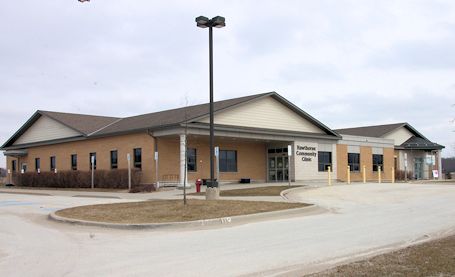 Dr. Bailey Dyck was hoping to join the medical team at the Hawthorne Community Clinic in Kincardine
When Dyck heard Gurbin’s response, she said it’s frustrating to hear the course of events summed up that way.
“I tried for months to negotiate a lease to work at the Hawthorne clinic,” she said, recounting that much of the information was relayed by Gerry Glover, chief executive officer of the Kincardine Family Health Team. At the time of the negotiation, Glover was Ward 1 councillor on Kincardine council, and is now the mayor.
Dyck said that after council turned down her recruitment, she inquired if space at the medical clinic was still available. She met with Dr. Lisa Scott, Gurbin and Glover, July 16, and “everything was very warm and positive at the meeting.” However, there were no precise cost breakdowns or commitments, she said.
In late July, Glover sent her an E-mail message, stating that he was putting together an overview. She heard nothing until August and was getting nervous as it requires multiple months to settle on a location, hire a medical office administrator, order supplies for set-up, etc.
“All this time, I was working out of town, here and there, trying to make some income but living full-time in my home in Kincardine,” she said.
Glover replied Aug. 11 with some information on possible clinic rental costs. “Again, he emphasized ‘figures presented are for illustrative context,’ so I didn’t have a firm sense of what costs I would be asked to commit to, for what duration, etc. I had questions about some of the breakdown costs that I followed up on via E-mail that day. I was connected with Shelley Kiertucki at the clinic, but she couldn’t answer most of my inquiries, and advised that Gerry (Glover) would need to respond.”
As Dyck pushed for more information, she was told that if she elected to be a full member of the clinic, she would be added as a signatory member which, essentially, outlines decision-making.
“I was provided a copy of the cost-sharing agreement but this created a challenge for me,” she said. “The draft cost-sharing agreement was for physicians in their Family Health Organization (FHO). As a specialist, I can’t be part of an FHO – it’s for general practitioners (a.k.a. family doctors) only.”
She relayed this back to Glover, and asked for an independent lease agreement, after which she received an unsolicited E-mail from Gurbin. It confirmed Glover’s comments that the clinic worked seamlessly - and mutually comfortably - with the surgeon, Gora.
“We understand you would have a different payment model, you would not be subject to any of our governance but would have full participation, at your discretion, to clinic physician management meetings which occur every one to two months or as needed,” Gurbin told her. “These meetings deal with ongoing clinic management issues common to all working in the clinic, i.e. COVID-19, garbage, reception, etc. Glad to follow-up if anything else is helpful.”
Dyck said Glover contacted her Aug. 29, indicating there would be no difficulty drafting a specific agreement between her and the clinic. He said he would endeavour to get a raw draft to her before the end of that weekend.
She said she sent a message back to Glover, saying that she would try to keep delaying her timelines but she really needed to get things settled so she could start working.
“By Sept. 21, I had no further follow-up,” said Dyck. “I sent an E-mail to Gerry (Glover) and indicated I couldn’t wait any further and was moving to join clinic space elsewhere.”
Dyck said she desperately wanted to join the Hawthorne clinic. “Being integrated at the same site with the other physicians was, and still is, very important in terms of helping generate a productive working relationship, facilitate referrals and build my practice, and, just as importantly, help with work and social isolation.
“It’s incredibly hard as a brand new specialist physician, being in a community where you don’t have a network of people with experience to rely on, for such things as how to get particular medical tests ordered, who to refer to for particular clinical questions, and to start integrating into the community.
“I started talking to them (clinic representatives) in April under the assumption of being recruited, and then resumed speaking with them at the start of July. I kept trying to get an arrangement but had to give up by the end of September; otherwise, I was just waiting, frustrated, without work and without income.”
Dyck said the most frustrating part of the whole ordeal was that the doctors and the community were overwhelmingly encouraging and inviting. “Where I felt frustrated without action was the actual negotiation of joining the practice once I was no longer under any sort of recruitment.”
As to Gurbin’s views about visiting specialists, she said there is a big difference between them and a specialist who moves to the area to work there full-time and set up a practice. “I’d struggle to compare these two models where one has a full-time commitment elsewhere and provides intermittent support to a satellite clinic.
“I think it’s worthwhile for them to consider things from my perspective. Based on my interactions with Peggy (Zeppieri), I was advised that while incentives were generally for family doctors, there was one for a general surgeon in the past. She and I conversed back and forth without any indication that things were tenuous or exceptional. I literally have an E-mail from her that starts with, ‘I am happy to offer you an incentive ...’
“When I was told council did not want to pursue the incentive, it felt essentially like a bait-and-switch on my end. I’d also like to reinforce that a lack of incentive was NEVER a deal-breaker for me; but it was something I was offered that just disappeared. And once it evaporated, it left me having to figure out my practice set-up plans all over again, delaying my career start and income source.”
In reference to Gurbin’s comment that it takes considerable time to develop a specialist practice, Dyck said rheumatology is the most frequent non-surgical specialty referral.
“There is a provincial shortage of rheumatologists, with the most recent estimate indicating that based on population density, we need an additional 200 full-time adult rheumatologists to adequately treat Ontarians at present,” she said.
“I have several colleagues who are rheumatologists, having graduated the same cohort as myself. For example, my closest friend already has an eight-month wait-list and is working five days a week - despite the current pandemic environment.
“I actually did research prior to committing to Kincardine as our future home, and based on population densities in Grey and Bruce counties, felt highly confident the catchment area would be more than sufficient to sustain another full-time rheumatologist.”
 Written By
Liz Dadson is the founder and editor of the Kincardine Record and has been in the news business since 1986.



Related Stories
No related stories.