Ripley 4-H Dairy Club tours two dairy barns near Teeswater
The Ripley 4-H Dairy Club held its fifth meeting, Aug. 14, and spent the day touring two dairy barns near Teeswater.
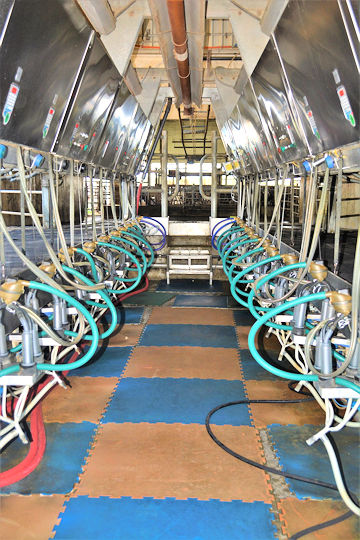
The first was Albadon Farms, a multi-generational operation started by, and named after, Donald and Alberta Ireland, in 1866, a year before Canada even became a country. Now, it is run by Josh Ireland and his father, Mark, their families, and several employees. They are currently milking 290 Holsteins, three times per day in a double-10 parlour.
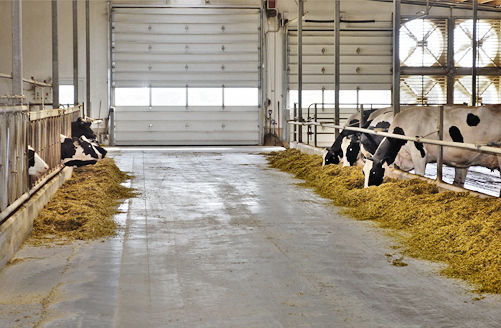
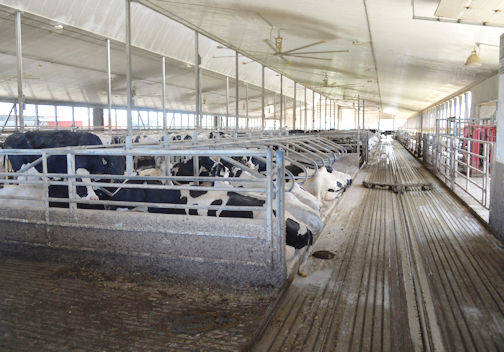
Over the years, the Irelands have built several barns. The newest one, built in 2019, is a dry-cow/calving barn. The club started the tour in this barn which is temperature-controlled. As the barn warms up, the fans speed up, the curtains open farther, and the misters over the feed area turn on. The reverse happens in the winter when the temperature falls.
The barn is divided into two groups: dry cows and the close-up cows (cow that are about to calve), but it can be divided up to six groups. There is a breeze-way joining this barn to the milking barn, allowing for easy movement of the fresh cows to the milking barn. This barn is also where the newborn calves are housed until they are moved to the calf barn.
Next, the club moved to the milking cow barn. This barn is divided into three groups: lactation cows, high-producing cows, and low-producing cows. The milking cows are fed twice per day, once in the morning and again after the final milking at night, unlike the rest of the cows and heifers which are fed only once per day.
One of the things the Irelands focus on in their herd, is hoof care. They trim the entire herd’s feet three times per year. To accommodate this, there is a hoof-trimming area in the milking barn.
Unlike most milking cow barns, the parlour isn’t actually in the same building. It is in the original milking barn. This spring, it was upgraded to a double-10 from a double-eight. The breeding heifers are also housed in the parlour barn, and at the back is the shed where all the feed is made.
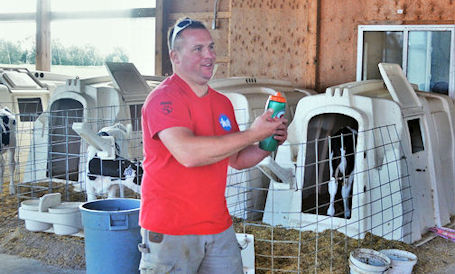
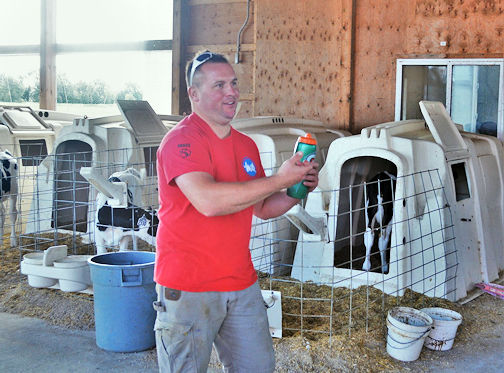
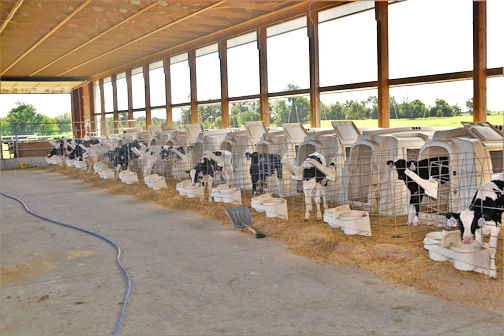
The final stop on the tour was the calf barn. The Irelands have an average of 350 calves born each year. The calves are moved to this barn after they are finished getting colostrum from their mothers. Instead of pens, the calves live in hutches in the barn until they are weaned at about 56 days old. Then they are moved to a group pen.
Because 40 per cent of the herd is bred to beef bulls, there is a second calf housing area outside the barn. The reason for this is bio-security. This way the replacement heifers are not exposed to diseases that might be carried on the trucks picking up the market calves.
Once the tour of Albadon Farms was completed, the club moved on to the next farm which was just around the corner.
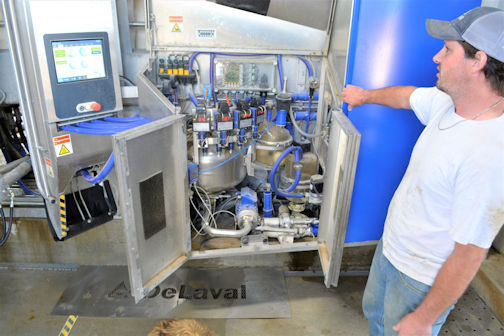
This was Doral Farms, run by Tom Whytock and his family, who milk 70 cows. For the past 10 years, they milked in a double-eight parlour, but recently they installed two Delaval milking robots.
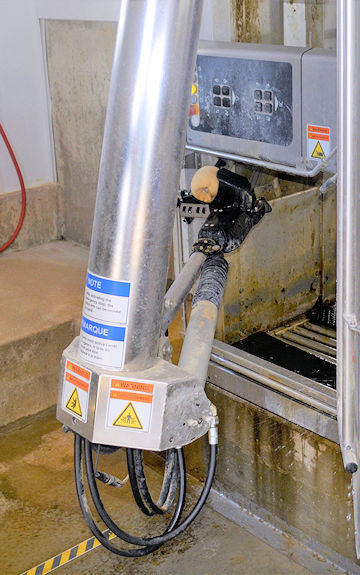
Unlike most robots which use a laser-guide system for hooking the milking unit to the udder, the robots at Doral Farms use a 3D real-time camera. This allows the robot to hook up each quarter individually, with more accuracy, and speed. In order to keep the camera clean, the robot washes it after each and every milking. It will also rewash the camera if the robot is having trouble locating the teats.
Whytock also showed the club the electronic side of the robot. This includes a monitor which shows how much milk each quarter gives and what stage the cow is in her visit.
Next, Whytock took the club to see the dry cow/calf barn which is a Britespan fabric building, built in 2016. This barn has a robotic calf milk feeder and a self-cleaning bedding pack. Doral Farms has just over 100 calves born each year.
At the end of the tour, Whytock took the club to his office and walked the members through his different computerized record-keeping programs. He also explained his electrical fire-detection system which detects the voltage draw on each panel and sends an alarm to the farmer's phone if there is an abnormal reading. The alarm continues until the farmer checks the system for fire.
The club finished the meet by discussing upcoming shows and the achievement day. A number of ideas were debated for achievement day and the final decisions will be made at the next meeting.
The club thanks Ireland and Whytock for hosting the farm tours and taking time out of their day to explain their operations to the club.
 Written By
No bio for this author.



Related Stories
No related stories.