Bruce Power increases site peak to 6,550 MW; sets goal for 7,000 MW by 2030
Bruce Power has announced it is making upgrades at the nuclear plant to increase output to 6,500 megawatts (MW), up from 6,300 in 2016. And ultimately, it will increase generation to 7,000 MW by 2030.
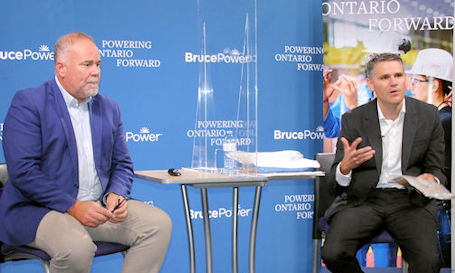
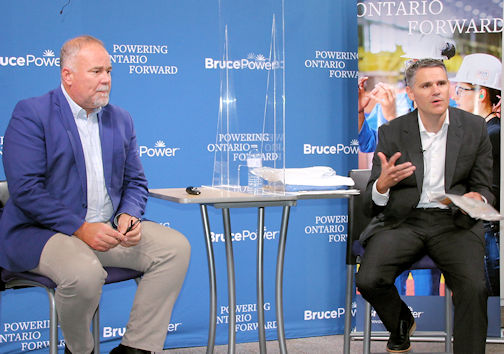
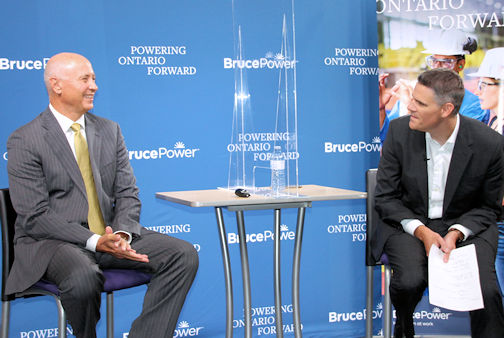
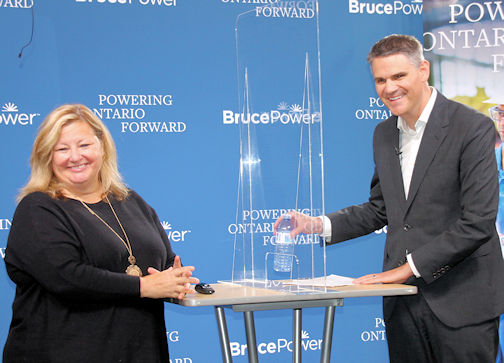
The company welcomed Ontario energy minister Todd Smith to the Bruce Power Visitors’ Centre, Thursday afternoon, along with Huron-Bruce MPP Lisa Thompson (agriculture minister) and Grey-Bruce-Owen Sound MPP Bill Walker (deputy speaker of the Legislature), for the formal announcement.
“We are moving forward with our five-point economic recovery plan and today’s milestones demonstrate we’re advancing this at a time when our province and our planet need it most,” said Mike Rencheck, Bruce Power’s president and chief executive officer.
“It’s a really exciting time for Bruce Power. By achieving a new site peak output and building toward a goal of 7,000 MW by 2030, we’re supporting Ontario’s recovery while also meeting climate change targets and providing the medical isotopes the world needs.”
The new site generation peak has been achieved through investments and innovations in the facility, and is enough to power up to 250,000 Ontario homes, businesses and hospitals.
“Ontario’s nuclear industry is well prepared to support the creation of new opportunities for growth and jobs, and drive emissions reductions,” said Smith. “By increasing its energy output, Bruce Power is leading the way, providing clean energy to hundreds of thousands of additional homes, while at the same time harvesting medical isotopes that will save lives, including in the fight against cancer.”
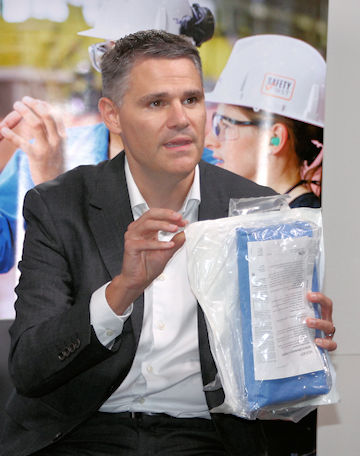
Bruce Power announced a Cobalt-60 isotope harvest later this year. The medical isotopes will be sent to Ottawa-based Nordion for processing and distribution, and will provide enough to sterilize 10-billion pairs of surgical gloves and COVID-19 (Coronavirus) swabs. Isotopes from the harvest will also be used in the treatment of breast cancer and brain tumours.
“Baseload, clean nuclear power and medical isotopes play key roles in our everyday lives,” said Walker, “and COVID-19 certainly accentuated the importance isotopes play in the sterilization of critical supplies and our health care system. Well done to the team at Bruce Power and best of continued success.”
The company has launched ‘Project 2030’ with the goal of achieving the site peak of 7,000 MW by 2030, supporting climate change targets and future clean energy needs. Project 2030 will focus on continued asset optimization, innovations, and leveraging new technology, which could include integration with storage and other forms of energy to increase the site peak at Bruce Power.
“Project 2030 is an impressive goal and one that I know will be reached by Bruce Power,” said Thompson. “The commitment to expanding the supply of affordable energy while also meeting climate change targets is commendable and I congratulate everyone involved.”
A feasibility review of opportunities is being conducted to achieve this 2030 goal, and individual initiatives will be announced as they are approved.
Key facts:
- In July 2021, Bruce Power announced its plan to contribute to a ‘Made-in-Ontario’ economic recovery, investing $3-billion over the next 18 months through the company’s Life-Extension Program, isotope development, and asset optimization strategy.
- A new site generation peak of 6,550 MW was announced, which will be an increase from 6,300 MW achieved in 2016, when all eight units are operating. At peak, this is enough additional electricity to power up to 250,000 Ontario homes, businesses and hospitals.
- ‘Project 2030’ is focused on achieving a goal of a 7,000 MW Bruce site peak through continued asset optimization, innovations and leveraging new technology, which could include integration with storage and other forms of energy.
- Bruce Power will complete a Cobalt-60 isotope harvest later this year, which will provide enough isotopes to sterilize 10-billion pairs of surgical gloves and COVID swabs. Isotopes from the harvest will also be used in the treatment of breast cancer and brain tumours.
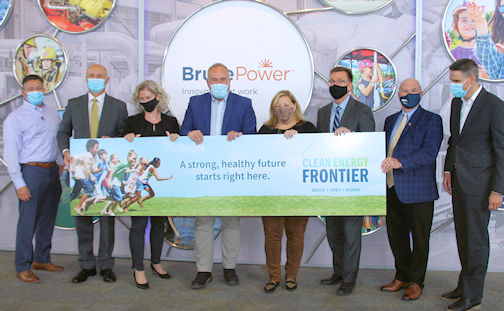
Following the announcement, Thursday afternoon, the group of dignitaries gathered around a sign, indicating Bruce, Grey and Huron counties as the “Clean Energy Frontier.”
Smith then took a tour of the Bruce “B” generating station to see first-hand the Major Component Replacement (MCR) project under way in Unit 6.
 Written By
Liz Dadson is the founder and editor of the Kincardine Record and has been in the news business since 1986.




Related Stories
No related stories.