


 November 14, 2015
1592
November 14, 2015
1592

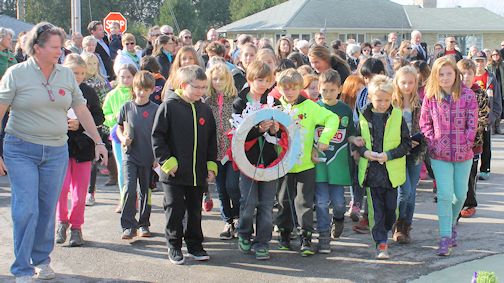
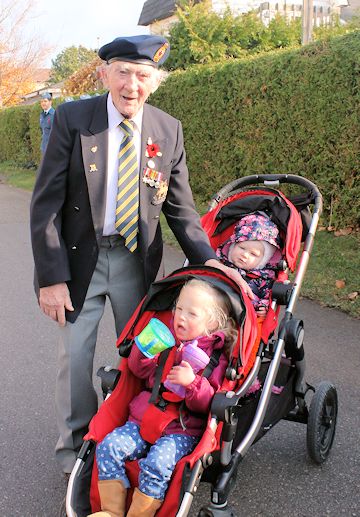
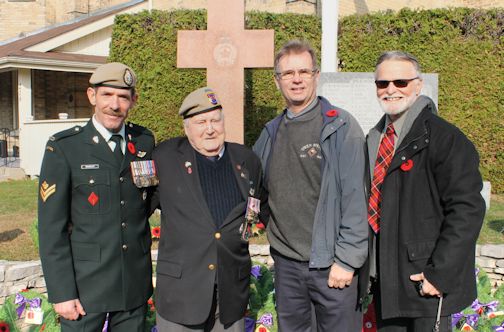
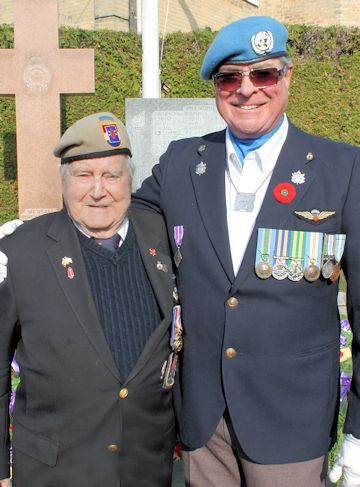
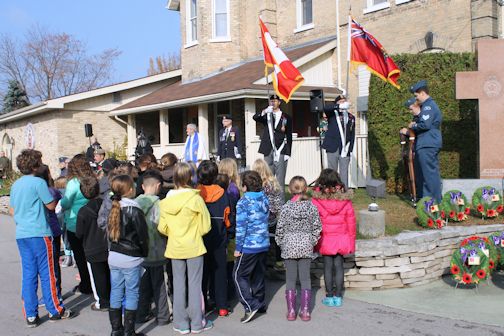
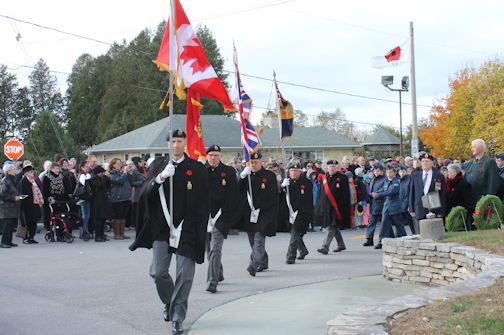
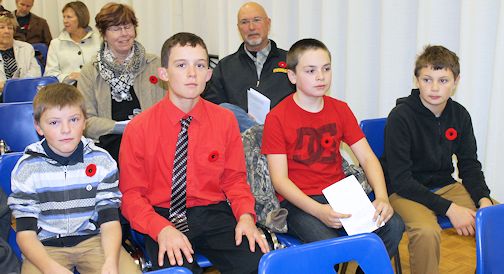
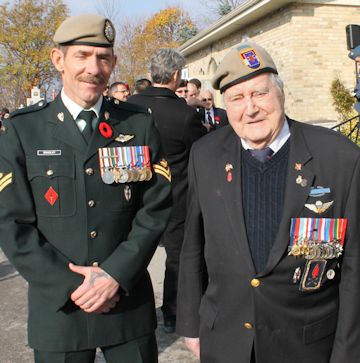
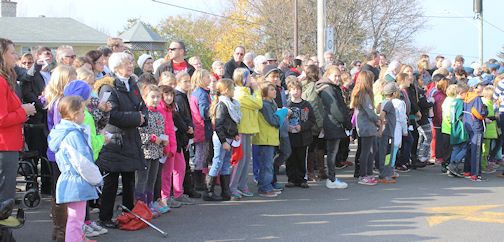
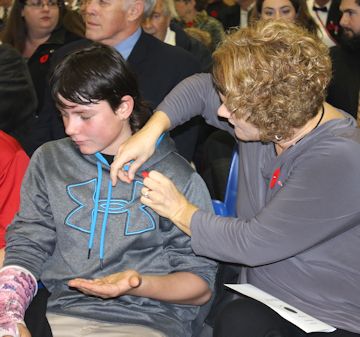
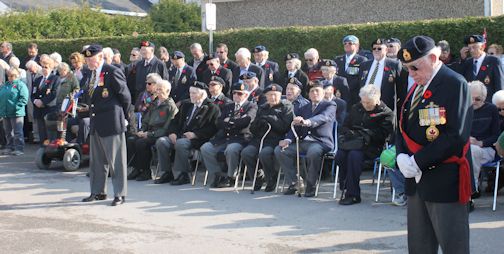
For the second year in a row, sunshine poured down on the Kincardine Remembrance Day service, Wednesday, as a huge crowd turned out for the event.
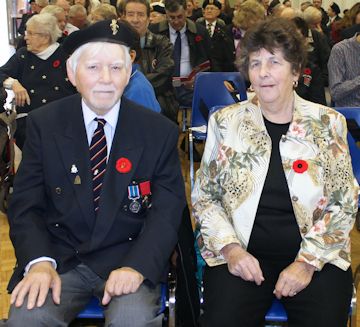
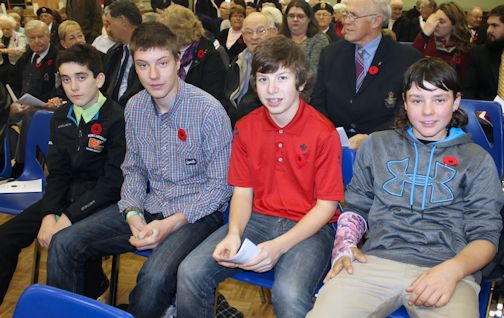
Inside the Kincardine Legion, it was standing-room only for the church service, led by Legion chaplain Rev. Jim Weir.
In his message, Weir said that God has designed our brains to store some memories but forget others, even if only temporarily. "God has set us up to forget things in our life. We are allowed to remember certain things and ideas at the appropriate time."
The Old Testament Scripture, taken from Joshua 4:1-7, speaks of the stone memorial that told generations of Israelites of the time that God brought them across the River Jordan to the promised land, said Weir.
"We need reminders to help us live each day," he said. "We all forget certain things and that's normal. We need monuments and calls to remember. We need memorials to remember a person or event."
He said that this year marked the 70th anniversary of the end of the Second World War. It was also the 70th anniversary of the liberation of the Netherlands in which the Canadian soldiers played a major role.
"The most important symbol of remembrance is the poppy," said Weir. "The donations for poppies and wreaths go to help the Legion care for our veterans. The Legion exists to help us remember and to thank our Armed Forces who fight and protect us so we can enjoy peace."
He said it's hard to believe that 100 years after the First World War, the Legion is putting up banners on Queen Street, Kincardine, honouring the young soldiers who died in that Great War.
"We have many recent veterans who are sick and need medical help," said Weir. "They suffer from post traumatic stress disorder which is the leading cause of suicide among the armed forces. Has our government worked hard enough to help them?"
The Kincardine Cenotaph helps us to remember those who fought in battles, and many who gave the ultimate sacrifice and never came home, said Weir.
He noted that the famous poem, "In Flanders Fields," written by Canadian Lieutenant-Colonel John McCrae, is almost 100 years old. It was written during the Battle of Ypres, after McCrae had spent 15 days caring for the wounded and dying. "He was saddened by the death of his friend and wrote the poem on Dec. 8, 1915. It gained almost instant worldwide appeal. McCrae died of pneumonia on Jan. 28, 1918, and is buried in France."
Weir said the Remembrance Day service includes the playing of "The Last Post" which signalled the end of the day in a military camp - on Remembrance Day, it signifies death. Later, "Reveille" is played which signals the beginning of the day in a military camp - and on Remembrance Day signifies hope.
"Today we wonder, what do those stones mean?"
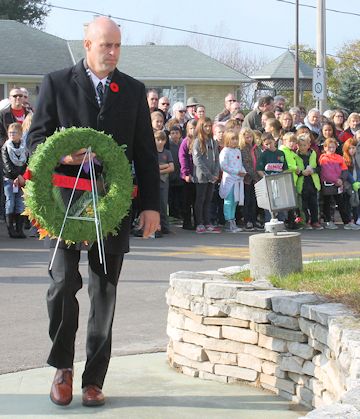
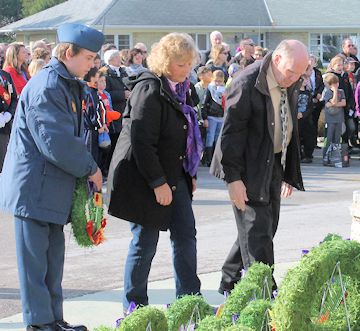
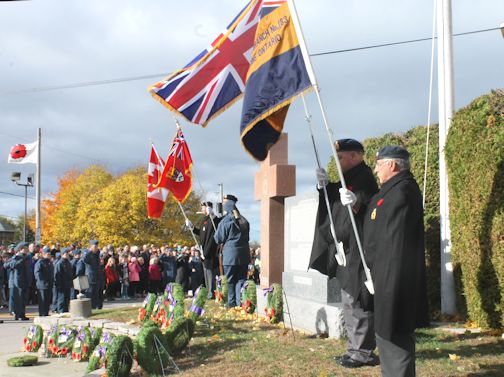
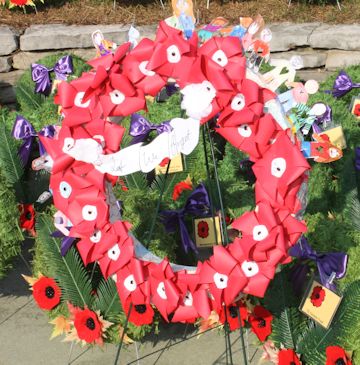
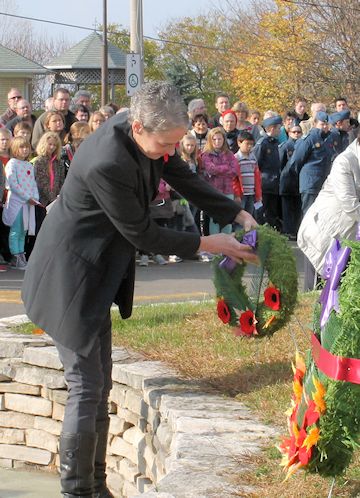
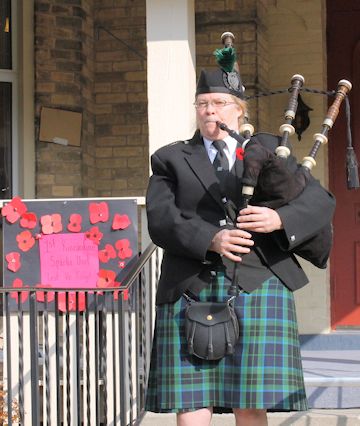
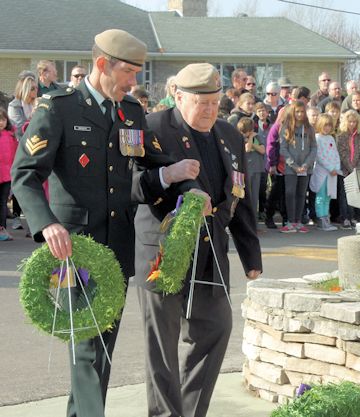
Outside, in front of the Cenotaph, wreaths were placed, until 11 a.m, when the crowd sang "O Canada," bugler Ray Kester played "The Last Post," there were two minutes of silence, piper Jennifer Farrell played "The Lament," and Kester played "Reveille." The remaining wreaths were placed, and the service ended with the singing of "God Save the Queen."
 Written By
Liz Dadson is the founder and editor of the Kincardine Record and has been in the news business since 1986.
Related Stories
No related stories.