Kincardine calls on province to review property tax assessment model for nuclear generation facilities
Kincardine is calling on the Province of Ontario to undertake an immediate review, and update the property tax assessment model for the province’s nuclear generation facilities and other properties within the electricity industry.
The motion, put forward by councillor Rory Cavanagh, at the Dec. 11 council meeting, stems from concerns about the current model that has led to a significant and persistent reduction in the levy share from generating station properties over the past three reassessment cycles.
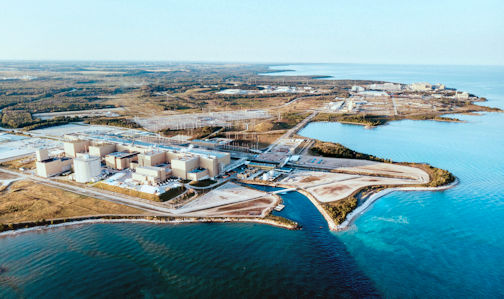
Among these properties, are the Bruce Power nuclear generating site and Ontario Power Generation (OPG)’s Nuclear Sustainability Services, located in the Municipality of Kincardine.
In a report to council, chief administrative officer Jillene Bellchamber-Glazier stated that the municipality receives property taxes from OPG as the owner of the Bruce Nuclear generating site. Those property taxes are calculated using the provincially-established special assessment treatment for electricity-generating properties.
The municipality engaged Municipal Tax Equity (MTE) Consultants to assist with a study of the impact of the current property tax assessment model for electricity industry properties in relation to other properties within the community.
The model is different than how other properties are assessed, stated Bellchamber-Glazier. The study showed that there has been a significant shift in contribution to the local revenue. In 2008, the Bruce Nuclear generating site contributed approximately 50 per cent of local assessment/rate-based revenue; that has dropped to just 18 per cent in 2024.
This reduction is largely due to the reliance on static, non-market assessments for many components of nuclear properties, which do not adjust with market or economic changes. Consequently, while other properties have been adjusted to reflect market dynamics, the static nature of nuclear property assessments has caused their relative share of municipal revenue to decline.
In his presentation to council, Peter Frise, MTE’s vice-president of policy and consulting services, explained that Kincardine hosts the Bruce Nuclear generating plants which represent some of the most significant electricity-generating infrastructure in Canada.
He said the main reason for the decline in revenue from the site is due to the prescribed, non-market valuation models that apply to major components of these properties. Similar assessment policies apply to a broader range of properties related to the generation, transformation and distribution of electricity, but the implications vary based on the scale of the property.
Frise said a municipality’s annual levy is distributed among all ratable properties based on the share of the total base each property’s value represents. For most properties, current value assessment (CVA) represents the Municipal Property Assessment Corporation (MPAC)’s estimate of market value at a certain point of time.
CVAs are updated periodically to ensure they reflect the current market conditions. However, many key properties associated with the electricity industry are treated outside these broad systemic norms. For example, all generating equipment and machinery are fully exempt which is generally consistent with the broader assessment system.
Frise said that since 1998, amounts raised by way of the commercial and industrial education rates for certain hydro industry properties, have been deemed to be local municipal revenue. Unlike municipal rates, there have been no upward adjustments in response to inflation, so education rates have been in constant decline over time.
As of year‐end 2008, Kincardine's local revenue raised from Bruce generating and other hydro properties exceeded $2.9-million, which represented over 35 per cent of the total levy. As of roll return 2024, this amount has decreased by over 24 per cent to $2.23-million.
Even more dramatic, said Frise, is the fact that this revenue source represents only 9.6 per cent of the municipality’s total local levy, a proportional decrease of over 72 per cent.
The historic patterns of decline have manifested in response to relatively modest market value
increases across the taxable base, he said. Overall, aggregate market change between 2008 and 2020 (three updates) was approximately 80 per cent. Current market indicators suggest that the next reassessment could bring market value increases double this magnitude.
If such increases were to materialize with no changes to the valuation of Bruce generating
properties, the impacts on the remainder of Kincardine's taxpayers would be unprecedented and
likely unmanageable.
Frise said the report is not saying that the Bruce site is not paying its share. “The rules are wrong, and the provincial policy needs to be changed.”
“This is not an issue with Bruce Power,” said mayor Kenneth Craig. “They’ve been very supportive in dealing with these challenges. And it’s not an OPG issue; it’s a provincial policy issue.”
Cavanagh put forward the motion and requested it be directed to the Ontario minister of energy and electrification, the Ontario minster of finance, and Huron-Bruce MPP Lisa Thompson; as well as copied to the Association of Municipalities of Ontario (AMO) and all Ontario municipalities.
Councillor Bill Stewart added a friendly amendment that it also be sent to Ontario premier Doug Ford.
That amendment was approved, as was the motion.
 Written By
Liz Dadson is the founder and editor of the Kincardine Record and has been in the news business since 1986.





Related Stories
No related stories.