


 March 15, 2016
2218
March 15, 2016
2218
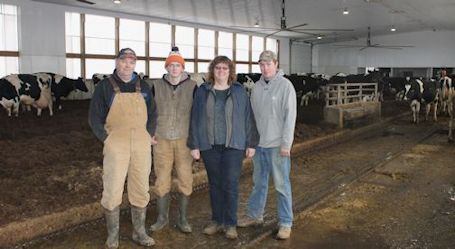
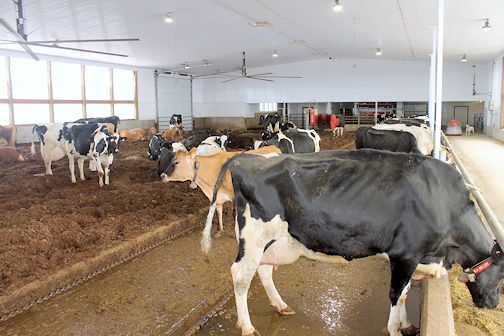
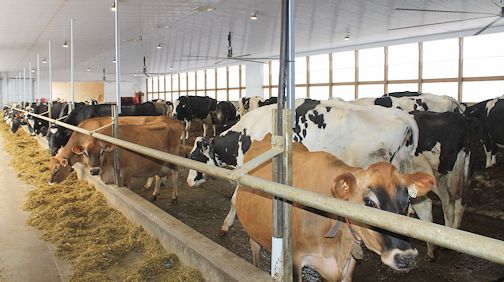
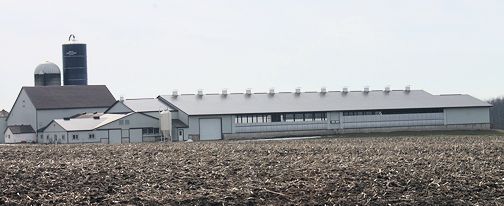
The state-of-the-art indoor compost pack facility was built last spring and summer on the farm of Geoff and Sandra Farrell, on Highway 21, south of Kincardine. Working with their sons, Thomas and Patrick, the Farrells switched their 60 cows over to the indoor pasture and Lely automatic milking system, Aug. 24.
Thursday, March 17, they are excited to welcome everyone to view the new barn and watch the cows, basically, milk themselves, thanks to the beauty of computerization.
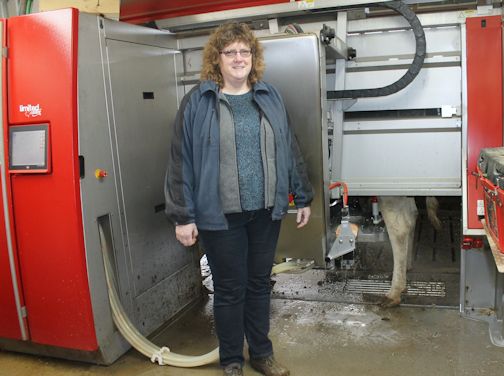
During a preview of the barn Saturday afternoon, Sandra Farrell explained how the operation works.
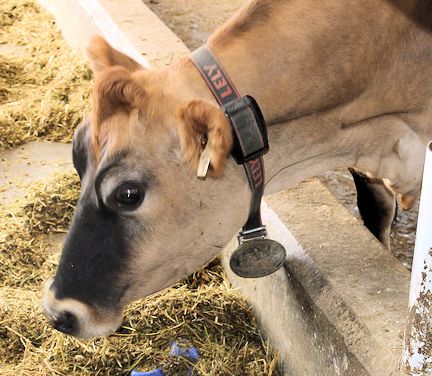
Each cow has a registered name, computerized ear tag and collar. When she walks into the milking stall, at her leisure, any time during the day or night, the computer identifies her and knows when she milked last, how much milk she produced, how much food she ate, and whether she needs to be milked again.
“The most impressive thing,” says Sandra, “is that the cows decide when they will be milked, when they eat and when they rest. The system is operational 24 hours a day, seven days a week. Before, when we had the milking parlour, it was a huge time commitment because we milked at 7 a.m. and 7 p.m. every day.”
Having the milking done automatically, frees them up to do other work, including feeding the cows twice a day, working the compost bedding with a tractor and cultivator twice a day, feeding the calves, and hooking up a misting system which will help cool the cows down in the summer time.
The indoor pasture features four 24-foot fans, with curtains and chimney baffles which are all run by a weather station at the end of the barn. Cows prefer it cool not hot, says Sandra, but the temperature never drops below five degrees Celsius.
The sawdust bedding facilitates the composting process, which not only keeps the pasture smelling good, it also results in high-quality fertilizer which is cleared out of the barn once a year and will be used elsewhere. The liquid manure goes into gutters and pumped into the slurry storage to be applied to the farm fields.
“It's a great indoor, climate-controlled barn,” said Patrick.
“It certainly changes the workload a lot,” added Thomas. “We have different work to do now.”
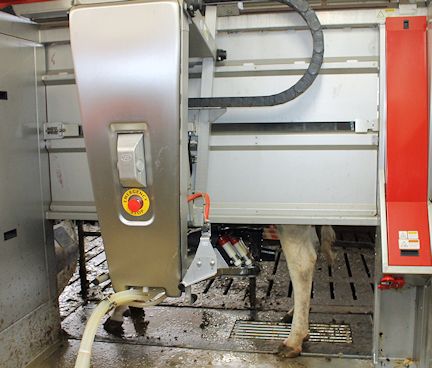
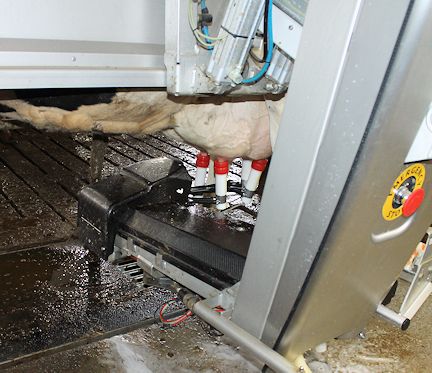
The cows are milked by the Lely Astronaut A4 model robotic milking system, named “Sadie, which was manufactured in Europe.
After a cow walks into the stall, the machine uses a brush to clean the cow's udder and teats, then the computer scans the animal to ensure everything is where it's supposed to be before putting on the milker. It also tests for the quality of the milk.
The milk runs through a series of lines to the bulk tank in the milkhouse and is picked up every two days by the milk truck. Because the cows are milked all the time, a second smaller milk tank accepts the milk while the large one is being emptied.
Since starting the automatic system, milk production has increased, said Sandra.
“Our average used to be 32 litres per day per cow,” she said. “Now, it's up to 37 litres per day per cow. Of course, that's an average of all the cows in the barn.”
She said the only hiccup in the automated system was the milking machine had some difficulty adjusting for the difference between the Jersey cows and the Holsteins. The Jerseys are much smaller.
There are computers in the barn and the house, and if there's a problem, it will call the Farrells by phone so they can check things out and ensure everything is running properly. For example, if three cows in a row had tried to be milked without success, the computer would call. Or if an hour had passed without a cow being milked, it would call.
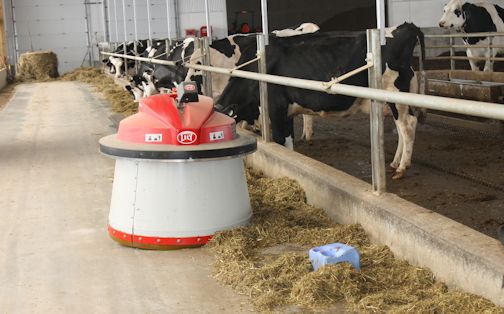
Besides the automatic milking system, the new barn also has a grooming machine, tipped water troughs, lighting that is on a sensor system, and “Juno,” the robot that automatically moves along the manger, shoving the feed closer to the cows.
Thomas and Patrick represent the sixth generation of Farrells to farm on this property. The dairy industry has certainly come a long way from milking cows by hand, to this space-age automatic milking system.
The March 17 open house runs from 10 a.m. to 3 p.m., and will feature displays by the builders, system operators and others involved in the project. It is open to local farmers and the public. “It's a great opportunity for people to come out and learn about the agricultural industry and see where their food comes from,” said Sandra.
A second open house is slated for April 9, also from 10 a.m. to 3 p.m., as part of the Bruce County Holstein Association car tour.




 Written By
Liz Dadson is the founder and editor of the Kincardine Record and has been in the news business since 1986.
Related Stories
No related stories.