CC-138 Twin Otter makes stop in Kincardine en route to Trenton
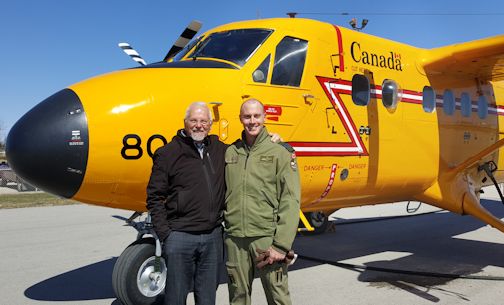
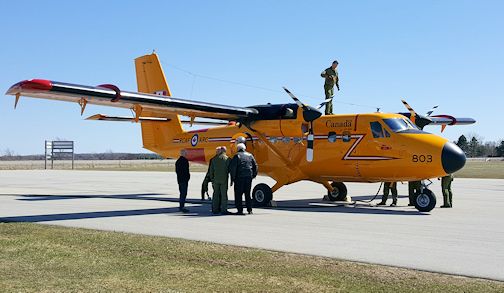
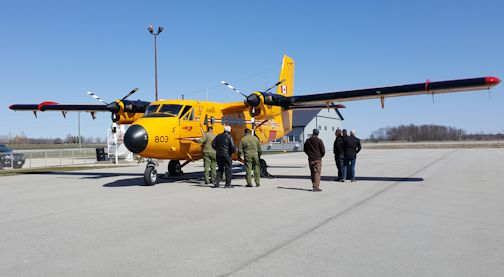
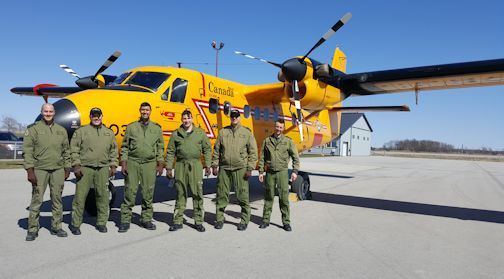
Captain Andrew Oakes and his crew were travelling in their CC-138 Twin Otter from Yellowknife, Northwest Territories, to Trenton, Ontario, and decided to make a stop at the Kincardine Airport to refuel, Sunday afternoon.
Of course, the question is, why?
The answer is simple. Oakes, 41, who is stationed at the Canadian Forces base in Yellowknife, was raised in Kincardine. His in-laws, John and Chris Moes, still live here, and this would give him an opportunity to visit them.
Since Kincardine is the halfway point between the two bases, the plane set down at the airport and took on fuel.
The crew was greeted by airport manager Blake Evans and Oakes' father-in-law, John, as well as some interested locals.
Once the plane was refuelled, the crew was headed to Kincardine for supper, and then off to Trenton where it was running a week-long parachute course for search-and-rescue teams.
Back in June, 2012, Oakes, a former Kincardine Air Cadet, was guest speaker and reviewing officer at the 24th annual review of the 183 Typhoon Squadron, Royal Canadian Air Cadets, in Kincardine.
The CC-138 Twin Otter is used mainly in Canada’s ever-changing northern climate and terrain. The short takeoff and landing utility transport aircraft can land on water, land, snow and ice.
Powered by twin turboprop engines, the Twin Otter is highly maneuvrable and has a service ceiling of more than 8,000 metres. It can be outfitted with wheels or skis to land on virtually any surface.
The aircraft is used in transport and support roles to the Canadian Forces’ northern operations and in search and rescue missions. It can carry up to 20 passengers or 2,999 kilograms of payload, and has a range of 1,427 kilometres.
The Canadian Force’s four Twin Otters are based in Yellowknife.
 Written By
Liz Dadson is the founder and editor of the Kincardine Record and has been in the news business since 1986.




Related Stories
No related stories.