March is Nutrition Month – learn about new Canada's Food Guide
March is Nutrition Month and the Grey Bruce Health Unit is encouraging people to learn about the new Canada's Food Guide.
“Our campaign highlights the role of dietitians in Grey Bruce,” says Laura Needham, public health dietitian. “Dietitians work with communities to promote health and wellness through food. We have a passion for food, nutrition and to inspire people to unlock food’s potential in their lives.”
Community members are encouraged to join the conversation with public health through
Facebook and
Twitter.
Also, Heike Boettcher, sales consultant and resident services co-ordinator at Trillium Court Seniors' Community by Revera, wrote the following about the new food guide:
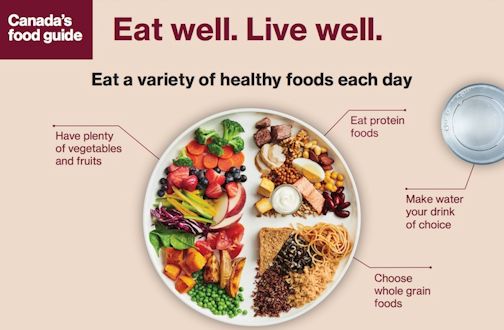
The new Canada’s Food Guide takes a modern approach to communicating dietary guidance to consumers, health professionals and policy makers. There are new features to explore that better meet your needs, whether you are looking for healthy eating information for yourself or as part of your work.
The overall guidelines within the revised food guide are as follows:
1) Nutritious foods are the foundation for healthy eating.
- Vegetables, fruit, whole grains, and protein foods should be consumed regularly
- Among protein foods, consume plant-based (legumes, nuts, seeds, tofu, fortified soy beverage etc.) more often
- Foods that contain mostly unsaturated fat should replace foods that contain mostly saturated fat
- Example of saturated fats: fatty beef, lamb, pork, poultry with skin, lard and cream, butter, cheese and other dairy products made whole or 2% milk
- Example of unsaturated fats: nuts, avocado, plant oils, some fish such as salmon and tuna, and olives
Tip: Saturated fats generally come from animal products and are solid at room temperature Unsaturated fats come from plants and fish and are liquid at room temperature
- Water should be the beverage of choice. Juices tend to be very high in sugar and should not be consumed regularly. Fruit is healthy in its natural state because you get both the juice and the fiber. It is the fiber that helps delay the sugar absorption in our bodies. Juice does not contain fiber, so the sugar is absorbed by the liver immediately. Instead, eat an orange or an apple to get most of the health benefits.
2) Processed or prepared foods and beverages that contribute to excess sodium, free sugars, or saturated fat, undermine healthy eating and should not be consumed regularly.
3) Food skills are needed to navigate the complex food environment and support healthy eating. Using the food guide might help.
Healthy eating in conjunction with regular exercise will benefit us all, regardless of age or health.
Always check with your doctor before beginning any exercise regimen or changing your diet.
Make it a habit to eat a variety of healthy foods each day. And if you need some fast, take-out food (and who doesn’t), eat it less often and in small portions. Try not to super-size it.
 Written By
No bio for this author.



Related Stories
No related stories.