Ripley 4-H Animal Crackers visit the wilder side of Bervie; and present projects
The Ripley 4-H Animal Crackers held their sixth meeting at the Bervie Zoological Park.
After introductions were made, the club began the tour, led by Tom Geddes. He showed the members several different kinds of birds, reptiles and mammals, such as ducks, swans, lemurs, and foxes, and a tortoise. The club learned some interesting things about these animals
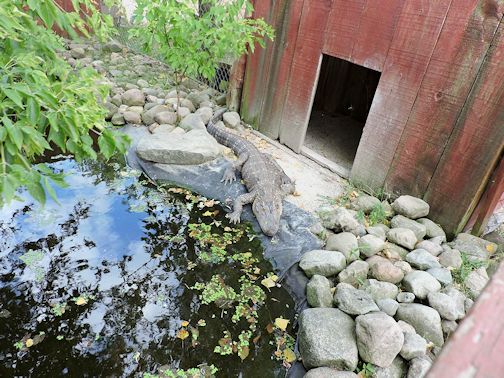
One of the first animals the club saw was an alligator. Geddes explained that alligators can’t chew their food so in the wild, they bury their food and wait for it to decompose to the point that they can swallow it whole.
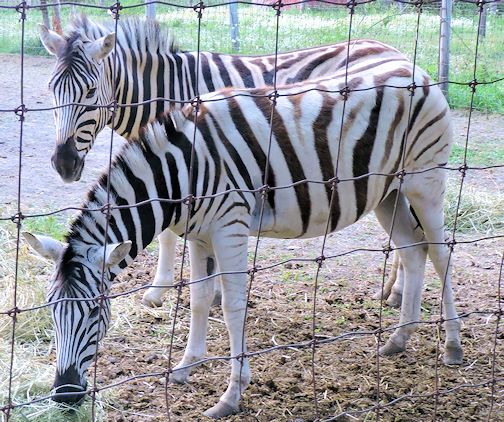
A couple of stops later were the zebras. The club learned that one of the main struggles with breeding zebras in captivity is that if a zebra is penned with donkeys or horses, the zebra will think it is a donkey or a horse and refuse to acknowledge other zebras.
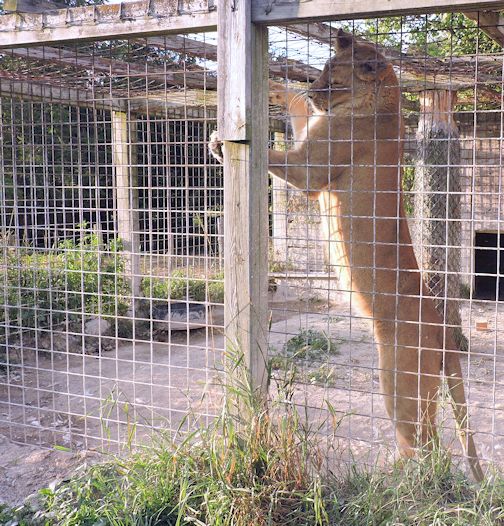
After a few more stops, the group arrived at the cages containing four lions. Geddes said the youngest lion’s name is Eve; she was raised at the Bervie Zoo. When Eve stood up on her hind legs, she was more than six feet tall.
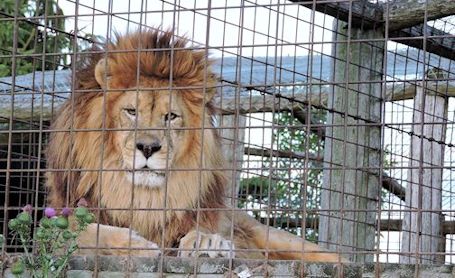
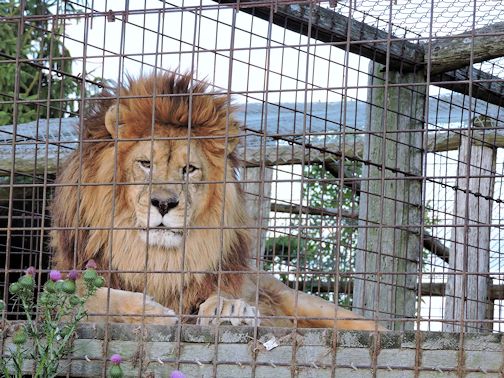
While avoiding a protective swan, the club moved to the rest of the lions. Samson one of the male lions, was quite willing to climb onto a platform in his pen and pose for a few pictures.
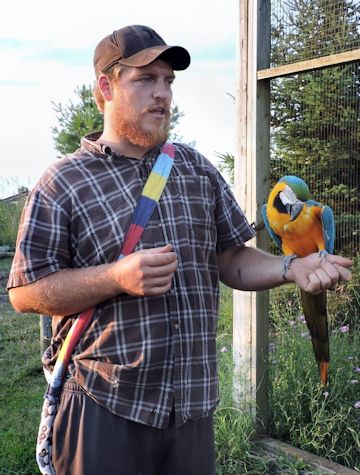
When the club members moved on from the lions to the parrots, one of the parrots greeted them with a “peek-a-boo.” Geddes explained that parrots not only repeat words they hear but also mimic voices.
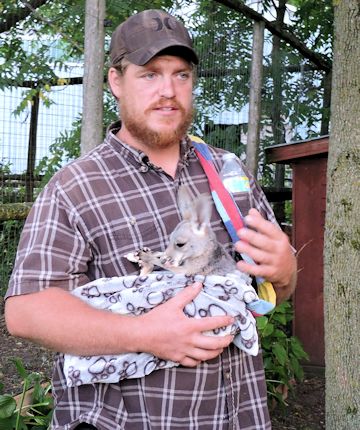
The kangaroos were one of the last stops. Geddes showed the club a baby kangaroo that is being hand-raised. It's in a fleece bag that he carries everywhere with him, even to bed. The joey is fed a bottle every three hours, day and night.
Kangaroos are very unique animals. They can have two babies at two different stages of development. The older joey can be drinking milk from one side of the udder and the younger joey can be drinking colostrum from the other side of the udder.
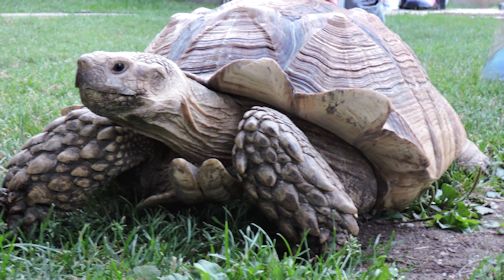
The last animal the club saw was a 200-pound tortoise.
The Animal Crackers thank Geddes for letting them tour the Bervie Zoological Park and for explaining each of the animals' different habits, living styles, and interesting facts about them.
MEETING SEVEN
The seventh meeting was held at Sandra Farrell’s farm, Aug. 29, where the members took turns presenting their projects.
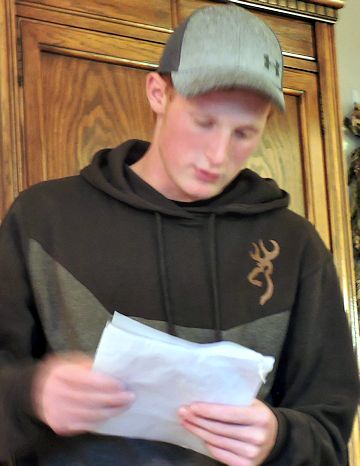
Aaron did his on herd health and preventing diseases from spreading.
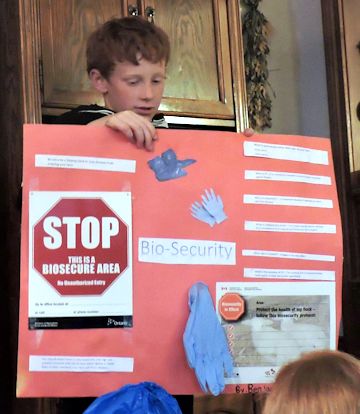
Ben did a project on bio-security.
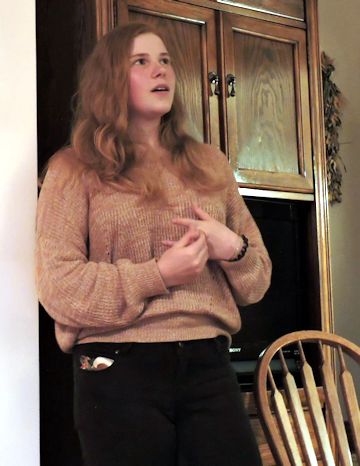
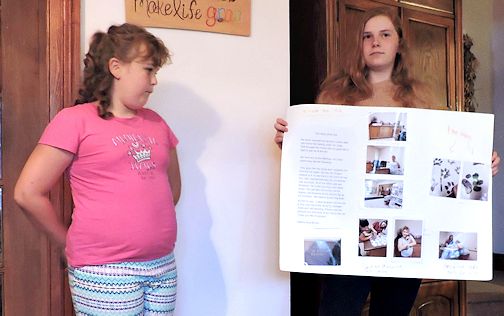
Katrina’s was about how she got Kit-Kat (her cat).
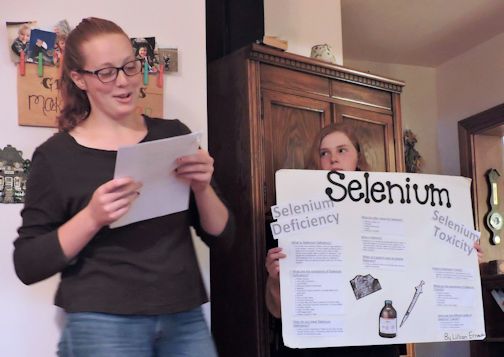
Lily did a project on Selenium deficiency and toxicity. Selenium prevents white muscle disease. This is a degenerative muscle disease that can cause everything from muscle stiffness to obvious pain with movement and the eventual inability to stand.
Ally did her project on a skunk’s spray and how to get rid of the smell (try baking soda and peroxide not tomato juice).
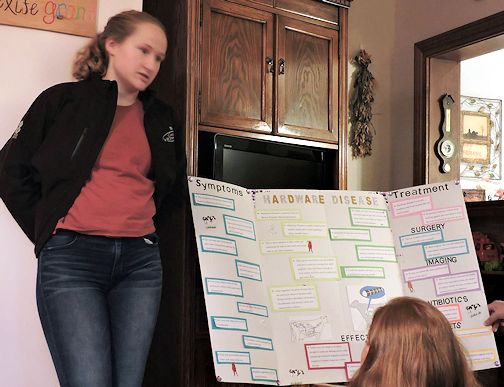
The final project was Molly’s on hardware disease in cattle and how to prevent It. This happens is when a piece of metal enters the digestive track of a cow, punctures the reticulum and enters the heart. It is prevented by having the cow swallow a magnet which will pick up the hardware and keep it in the reticulum.
The club thanks Sandra Farrell for hosting the meeting and providing the snack.
 Written By
No bio for this author.



Related Stories
No related stories.