Kincardine Residents Against Phragmites keep fighting invasive plant
This year’s high water levels have been helping the Kincardine Residents Against Phragmites (KRAP) to better control the invasive species, but their work is far from complete.
Phragmites has been popping up inland and can be seen in various locations around Kincardine, including the corner of Highways 9 and 21, the Kincardine municipal offices and in several agricultural fields.
KRAP committee member Anita Heikkila says this year, the group has shifted its focus from the beaches to areas inland where phragmites appears to be spreading.
“It’s amazing how much of a problem we have right here in Kincardine,” she said. “In our experience, most people have seen it, but don’t realize that it is an invasive species.”
Phragmites is an invasive plant that first appeared in Canada in the early 1900s. The first specimens showed up in Ontario in the 1940s. Since then, the plant has become well-established and can be found all over Ontario, along our 400 series highways as well as on many rural roads.
KRAP was formed in 2016 when Kincardine residents noticed a plant beginning to take over several of the beaches in Kincardine. Working closely with the Municipality of Kincardine, the group was able to identify the plant as Phragmites and organize volunteers to begin the process of controlling the plant.
With help from Dr. Janice Gilbert, a wetland ecologist, the municipality hired individuals to backpack-spray the plants that were established on dry land.
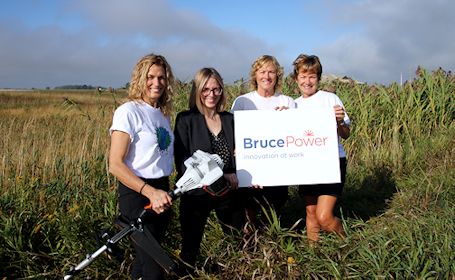
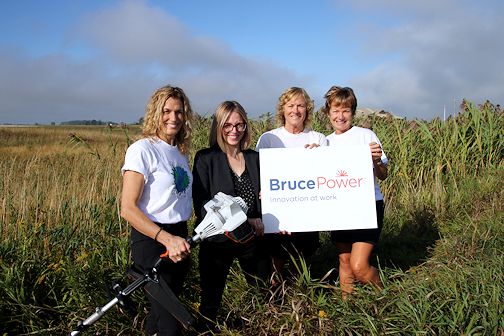
KRAP successfully applied for funding from Bruce Power and was able to purchase tools and hire students to start cleaning up beaches and raking up dead Phragmites. Kincardine volunteers then burned the plants and controlled new growth by spading plants as they began to reappear.
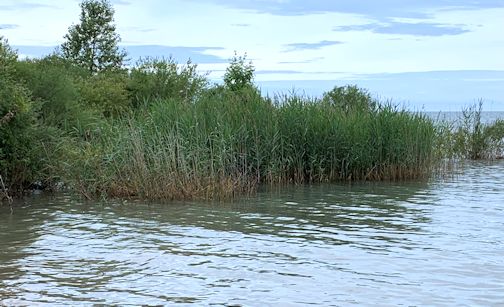
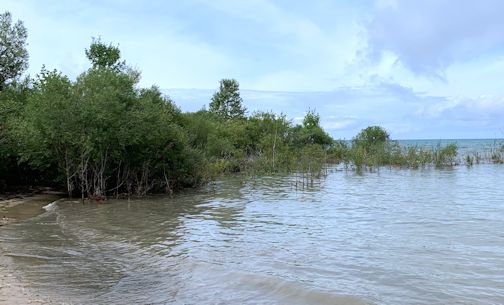
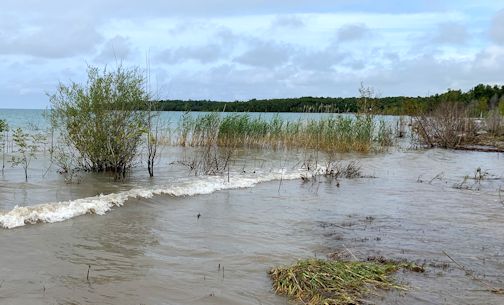
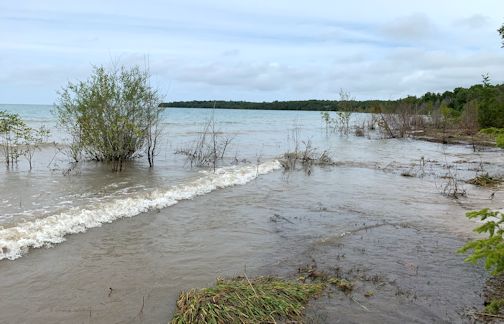
In the past three years, KRAP has helped to clean up and control a 16-kilometre stretch, from Boiler Beach to Lorne Beach. Due to the high water levels this year, some of the plants have effectively been drowned. However, in the Lorne Beach area, Phragmites has taken hold and is very well-established in the water.
Plants that are established in water cannot be sprayed, so more conventional cutting methods are employed.
KRAP president Gail Walden says that thanks to Bruce Power, the group was able to purchase a piece of equipment, much like a weed-eater, that goes under the surface of the water to cut the plant.
“We know from consultation with Dr. Gilbert that if we can cut the plant as close to the ground as possible, creating at least a couple of feet between the plant and the surface of the water, we have a better chance of drowning the plant,” she says.
Bruce Power’s support has also allowed the group to reach out to Kincardine residents to educate and inform them about the potential hazards and the detrimental effects this plant can have on property and on ecosystems, as well as teach individuals how to control its spread.
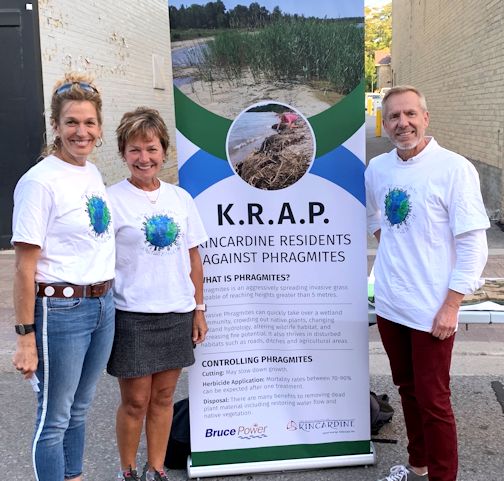
“At a recent Cruise Night in downtown Kincardine, we set up a display to help people better understand what the plant is and how it establishes itself,” says Heikkila. “We were actually shocked to hear that some people thought the plant was lovely and had planted it in their backyards!
“By setting up these displays and talking to people, we hope to teach them about the spread of Phragmites so they can join our efforts to effectively control its growth.”
She says one of KRAP’s goals is to inform as many people in the community as possible about Phragmites so the community has a better chance of eliminating it in this area.
Kincardine recreation director Karen Kieffer agrees that collaboration and partnerships are key to stopping the spread of Phragmites. Since 2013, the municipality has committed more than $200,000 to help eliminate the problem.
“We are pleased with all the efforts shown, to date, with regards to the eradication of Phragmites along the lakeshore, as well as the efforts of volunteers (KRAP) and our partners committed to the eradication, including Ontario Power Generation, Bruce Power, the Lake Huron Centre for Coastal Conservation, Saugeen Valley Conservation Authority, etc.,” she says. “
Our current Letter of Opinion from the Ontario Ministry of Natural Resources is valid until October, 2023, and the municipality plans to continue working with Dr. Janice Gilbert and community volunteers to ensure we win the battle.”
Members of KRAP are asking residents to report stands of Phragmites to the group.
“We have identified many established stands of this plant but we know there are many more,” said KRAP committee member Marlene Morrow. “Vigilance and diligence are key to ensuring that this plant stops spreading throughout our community in order that we can enjoy our beaches, protect our ecosystems, and keep Kincardine beautiful.”
To report a stand of this invasive species, contact Walden at
sgailwalden@gmail.com.
 Written By
No bio for this author.




Related Stories
No related stories.