Kincardine woman glad to be home after cruise cut short due to COVID-19
Wendy Cox is glad to be back home after her journey to South America, aboard the cruise ship, Zaandam, ended abruptly, due to the COVID-19 (Coronavirus) outbreak.
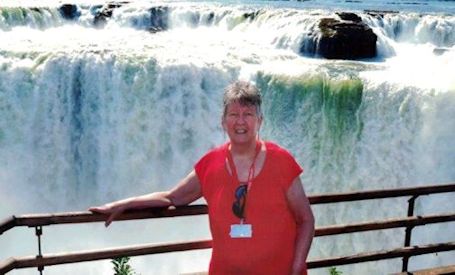
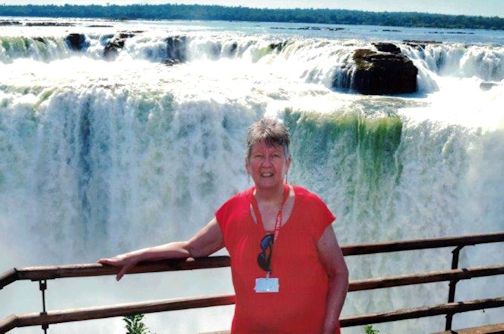
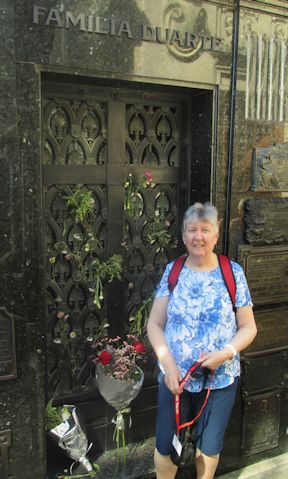
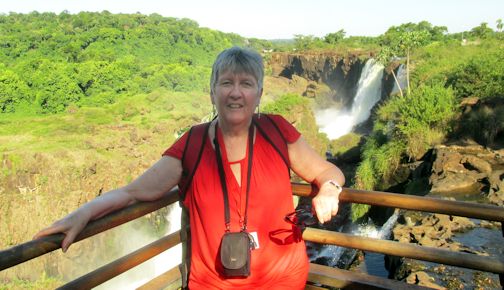
The Kincardine woman left March 1 and arrived in Buenos Aires the following day for a pre-cruise excursion to Iguazu Falls.
“This was a President's Cruise offered by the tour company and I'd booked it as soon as it was announced during the 50th Anniversary Cruise last March,” says Cox. “My travel partner/cabin mate was 82-year-old Dorothy who lives in Thornhill. This was the fifth time we had travelled together.”
While she had followed the news and realized COVID-19 had spread beyond China, where it originated, she decided to travel anyway.
“Before I left, my daughter, Francesca, had pointed out that there were ports closed to cruise ships,” says Cox. “I replied that they were in Asia and I was going to South America. Talking to my brother who lives in the UK (United Kingdom), my take was that this virus was going to go global and would eventually reach Kincardine. Should I stay home and lock myself in, or go on the cruise? At that point (March 1), there was only one case in South America and it was in Brazil. We weren't planning to enter Brazil. Nobody anticipated the speed of the spread.”
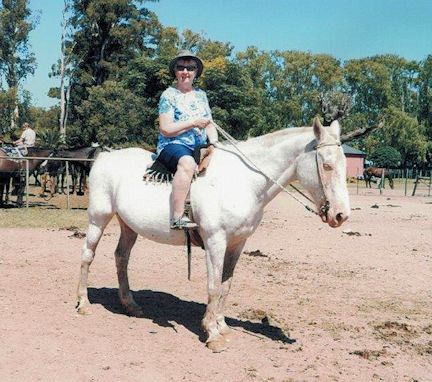
An avid traveller, Cox has been to South America before, many years ago, on a mission trip to Bolivia and Brazil as part of a group from the relief and development arm of Canadian Baptist Ministries.
“That trip didn't include much sight-seeing,” she says, “but it was encouraging to see the good work which was taking place. On that trip, I got food poisoning! I had never cruised around there before, and was looking forward to rounding Cape Horn!”
Unfortunately, the ship did not make it round the Cape during this journey either.
Cox says her first inkling that there was a problem related to COVID-19, was around March 14, one week after boarding the Zaandam cruise ship, part of Holland America Lines (HAL).
“We came out of Buenos Aires and visited Montevideo in Uruguay, then went south and stopped at the Falkland Islands,” she says. “The farther south we went, the colder it got, so I didn't do much exploring at the Falklands and we toured Montevideo by coach.
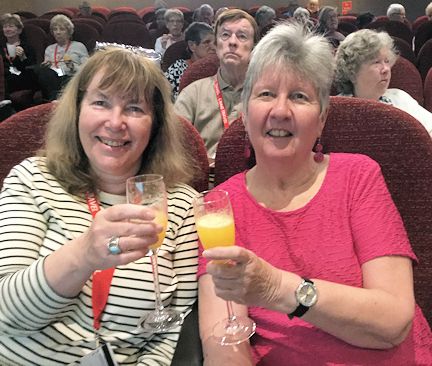
“After the Falklands, we went to Punta Arenas, Chile, and visited an Agro-tourism ranch, March 14. It was a fair coach ride from the port, and again it was cold. We were welcomed with Pisco Sours (an alcoholic cocktail of Peruvian origin that is typical of the cuisines from Chile and Peru) which I definitely could develop a taste for, and there was a lot of wine available to go with the barbecued lamb. There was a sheep-wrangling gaucho, some sheepdogs, sheep, cows, chickens and llamas, and some very gnarly trees of which I took photos.”
It was after the Zaandam left Punta Arenas and was heading to Ushaia, that the passengers learned that Ushaia was closed to them.
“The captain said that instead of cruising the fjords and channels for three days, we would add an extra day,” says Cox. “The next thing we heard was that HAL was ceasing operations because of the virus so we would be disembarked back at Punta Arenas. However, in the meantime, Chile issued a deadline that if we were not back before it came into effect, that port would not allow us entry.”
The ship returned to Punta Arenas only to find that officials there had moved the deadline back several hours.
“They would not let us in, although two Chilean registered ships that arrived around the same time, were allowed to dock,” says Cox. “So, we sat at anchorage for a couple of days while intense negotiations were conducted. Then, we heard that Chile required us to have a medical test, i.e. have our temperatures taken. We assumed that if all went well with that, we'd be allowed to dock.
“I have no idea whether that went well or not because Chile's next suggestion was that we should sit at anchor off of Punta Arenas for 14 days. Our good captain said, with indignation ringing in his voice, that we would not do that, we would instead proceed toward Valparaiso.
“I imagine that he was concerned about fuel, supplies and weather at this point. We didn't round the Cape because the captain said the weather was not suitable; instead, he took us through the Summer Passage. He told us, with a certain amount of pride and sheer glee, that he'd had to do it at high tide because then there would be two metres of clearance below the Zaandam!”
The ship continued on course, without any stops and/or shore excursions along the way.
March 21, the passengers were told to return to their cabins and stay there. Cox and her roommate, Dorothy were already in their cabin so the only concern was did they have enough books between them so they would have something to read?
“Happily, there were eight books,” says Cox. “A few were rubbish, a few not bad, and one I really enjoyed. At this point, we were really glad we'd opted for an outside cabin, i.e. one with a window. Before, we'd taken an inside cabin. Also, the HAL entertainment crew was daily producing printed puzzles, word searches, you name it, and inventing game shows and quizzes that were shown on TV. The entertainers who were stuck onboard with us, gave interviews and put on extra shows which were televised.
“We were given complimentary drinks (pop, wine, beer, spirits) which we could order every day - you might not get exactly what you'd requested but there was always something. Three meals per day were delivered to us - you couldn't choose what you wanted but there were always two different ones, including one vegetarian - and you and your cabin-mate could decide who got what. We were also given free wifi and phone calls so we could keep family up-to-date.”
The passengers were confined for a total of 12 days, and those who were symptom-free, were allowed to go outside for a half-hour on one day. They also called cabin-to-cabin, checking on friends to lessen the feeling of isolation.
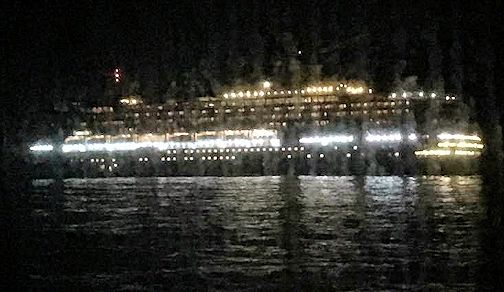
Cox says she was never concerned about her safety on the ship. “I was surprised at how emotional I felt when the Rotterdam came into sight (meeting the Zaandam to bring supplies). It was pitch black outside but she sat there with every light blazing and it was such a heartening sight to see that I did tear up a bit.”
 The Rotterdam arrives alongside the Zaandam, March 26; photo courtesy of Wendy Cox
She and Dorothy had developed dry coughs early in their confinement but weren't sure whether it might be the virus or the common cold they might have picked up from a table-mate.
“Dorothy was afraid she might be developing pneumonia as she had done on one of our previous cruises,” says Cox. “The only thing that pointed away from a common cold was that my nose /sinuses were congested, not running, and I also had a headache. And the cough had been because the air in the cabins was very dry. I tried to alleviate the dryness by doing laundry every other day and pinning it up to dry on the line in the bathroom. I also wet a bath towel and hung it in the cabin.”
After about four days, their coughs disappeared, but Dorothy had chills and lost her sense of taste.
“I missed out on the chills and I can't describe my symptom as loss of appetite; it was more a total aversion to food,” says Cox. “I'd take the lid off of whatever we'd been served, but would have to replace it quickly because I couldn't look at the food. We did our best to find something we could tolerate - one night for supper I had three small pieces of French bread!
“I also suffered from what is politely referred to as gastritis but at that point, nobody was listing gastric symptoms as pointing to the virus - the nearest they got was 'loss of the sense of smell.' The bottom line was that for any kind of influenza-type problem, people are advised to rest and take lots of fluids, so we were ideally set up for doing both of those things.”
When it was decided to transfer healthy people to the Rotterdam, the passengers had to complete a health questionnaire and have their temperatures taken.
“Dorothy and I knew we wouldn't be transferred because it was during the time when we both had coughs, but the 'Martian' who arrived at the door (draped in protective gear) didn't have a problem with our temperatures,” says Cox. “The same thing happened with all the other temperature checks which were done - including the 14-day quarantine period at home - at no time have I run a fever.”
After returning to her home, Dorothy was checked and tested positive for COVID-19.
While Cox and her cabin-mate were comfortable aboard ship, family members were worried about their fate.
“I imagine the combination of an aged mother and a deadly virus might have caused a few grey hairs,” says Cox.
She says that once the Zaandam made the national news, with reports that passengers were desperate to get off, she was upset – but mostly with those passengers.
“I couldn't believe that people would do that to their families,” she says. “What did they think was going to happen - someone send a helicopter just for them? Get real! You might be at risk for the virus but your family is now having nervous breakdowns and heart attacks! We all would have preferred to skip the situation but knew it wasn't going to happen in a hurry, so you hunker down and get on with it.”
As for being confined to the cabin, Cox says that she and Dorothy spent the time reading, napping phoning their friends, E-mailing updates home, checking Facebook and news channels on the iPad, watching TV, attempting to eat something, looking out the window at the sunshine and the sparkly sea, and doing laundry. “I regretted losing my appetite for wine when there was a complimentary drinks package!”
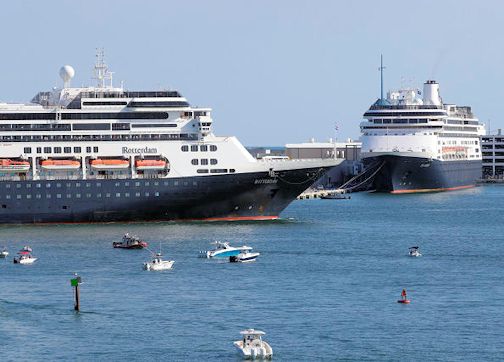
When the Zaandam and Rotterdam reached the Panama Canal and there were questions about whether they could go through and then dock at Fort Lauderdale, Florida, Cox says she wasn't thrilled, but there was nothing she could do about the situation.
“We knew the HAL organization and the Canadian government were doing the best for us,” she says. “I was disappointed that we didn't see much of the canal because we were 'expedited' through late at night and the Panamanian authorities wanted our lights off and our curtains closed. We did watch a bit of it through the bow camera which has its own channel on the TV.”
Once the ships docked, the first task was to take the critically-ill passengers to hospital.
“We could see that process from our window,” says Cox. “Then, that evening, deck-by-deck, we went across to the facility to have our temperatures taken - walking two metres apart, but within voice range of some of our group that we hadn't seen or heard from, so it was also neat to see our friends. Also, to celebrate our arrival and to toast the crew, HAL had a bottle of sparkling wine delivered to everyone.
“The officials and staff at the port couldn't have been kinder or more sympathetic. Like the Floridians who waved from the side of the channel, or from their windows or balconies, as we came into port.”
The Broward County Sheriff's Office escorts Canadians to the airport April 3; there was an impressive number of motorbikes alongside; video courtesy of Broward County Sheriff's Office
The passengers were taken to the airport from the ship by coach buses, with an impressive motorcycle escort, and then they flew home. Cox was picked up at the Toronto airport by her son, Richard, and even though she worried that he might catch something, she was pleased to be home.
“I was glad to see the cat and the condo (condominium), but I was worried that I might be polluting both,” she says. “I threw everything in the garage and left it for three days. I undressed in the garage - every stitch of clothing - and left it for three days too. I showered and fed the cat before staggering off to bed.”
Cox was required to quarantine for 14 days and says that was not a problem.
“My condo is spacious compared to the cabin - it was just nine paces from the door to the window,” she says. “It was actually great to be on my own. Dorothy and I get on very well, but we'd been together for over a month and I was ready for some alone time.
"There were a few things that needed attention. I finally unpacked and did laundry over a few days, then I cleaned over a few days - took lots of naps because I still don't have a lot of energy. Francesca had arranged a grocery delivery before I got home, so I didn't have to worry about food and given that my food aversion wasn't totally over, I just ate what I could tolerate whenever I felt like it.”
Does she think things could have been handled better during the cruise and on the trip home?
“We were all doing the best we could in a situation that nobody had experienced before,” she says. “I would hate to have been someone with the responsibility for handling any of this. HAL wiped clean our shipboard account. The compensation packages we've been offered are very generous, especially when you consider that the situation was not of the cruise line's making.
“We were cared for very well, as far as I'm concerned. However, Global Affairs did have the glitch with our personal details but is replacing our passports and setting us up with monitoring from TranUnion for two years.”
And she is already planning her next cruise.
 Written By
Liz Dadson is the founder and editor of the Kincardine Record and has been in the news business since 1986.



Related Stories
No related stories.