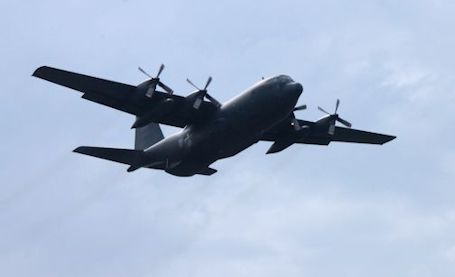
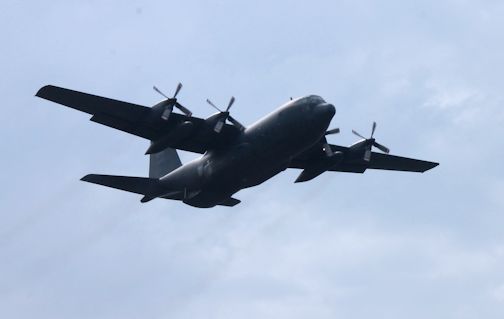
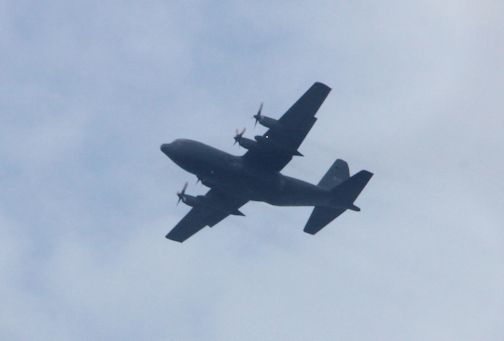
The roar of the engine could be heard for miles, as a C-130 Hercules search-and-rescue plane made numerous passes over the Kincardine Municipal Airport, Thursday morning.
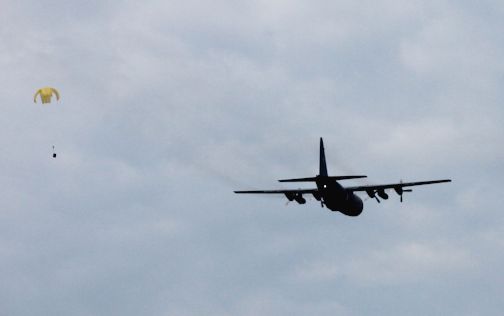
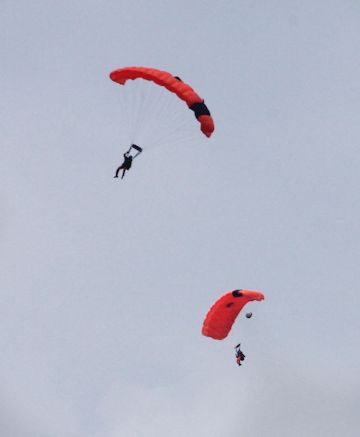
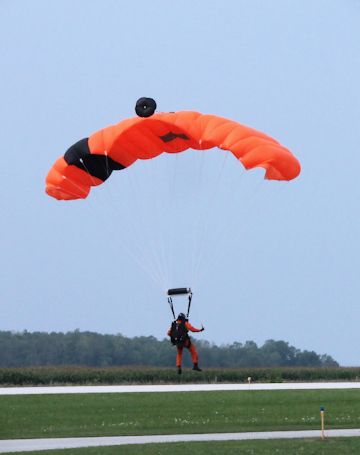
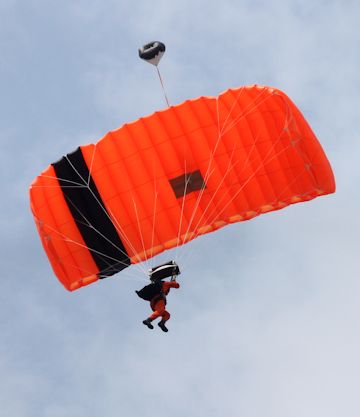
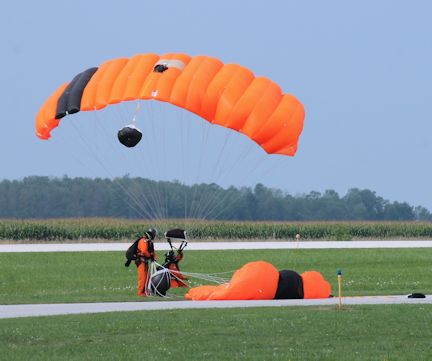
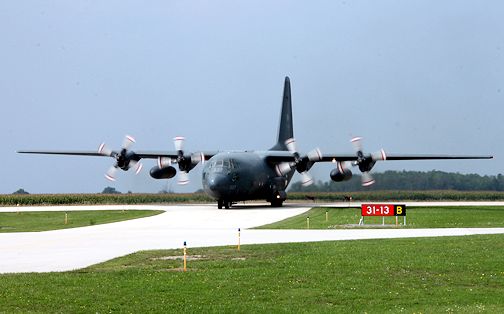
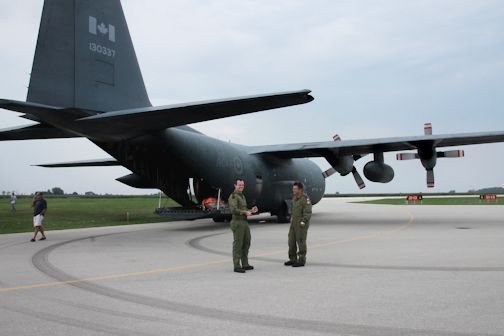
Captain Dan Clarke and his crew, of Canadian Forces Base (CFB) Trenton, were conducting training exercises, dropping cargo, streamers, and eventually two parachutists, before landing on the main runway, just in time for lunch.
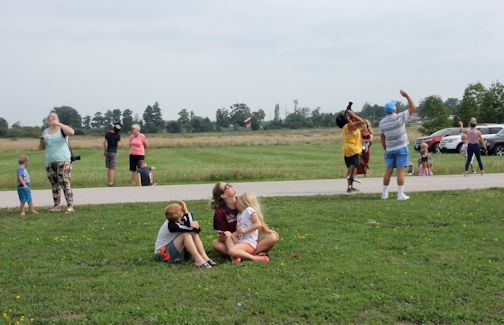
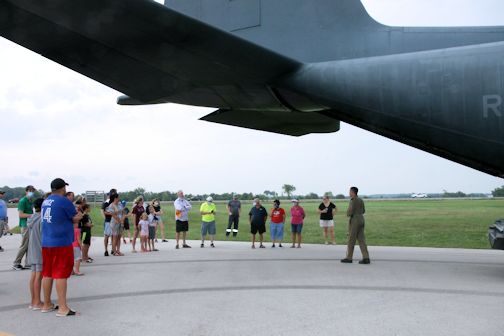
This was the first time the squadron had touched down in Kincardine and while there was just a small crowd of about 30 people, due to COVID-19 (Coronavirus), the crew put on a good show.
Airport manager Steve Rouse, of Phoenix Airport Management Group which also owns the Owen Sound Airport, said the search-and-rescue planes land in Owen Sound frequently due to its proximity to the Meaford Military Training Centre.
So, he suggested they stop at Kincardine in their quest to check out small, rural airports as a possibility for training exercises.
And everything went right on schedule, despite the overcast sky and gusty wind.
A C-130 Hercules search-and-rescue plane flies over Kincardine Airport, Thursday morning
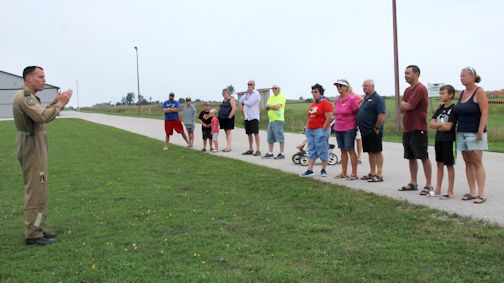
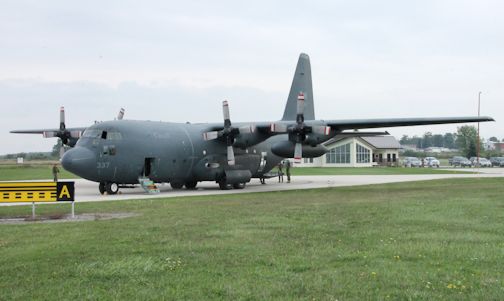
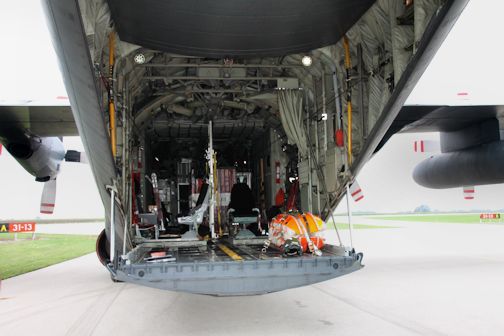
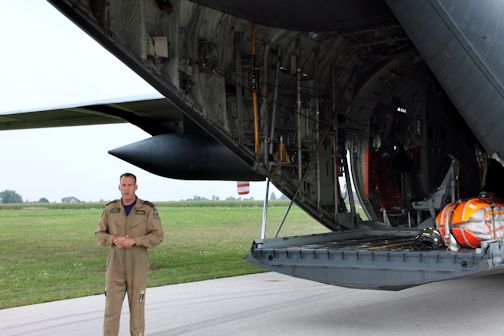
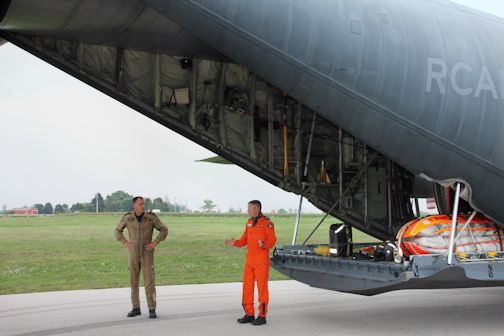
Once the plane had landed and was secured, Clarke spoke with the crowd beside the terminal, talking about the plane and its search-and-rescue missions. He then escorted the people over to the back of the plane so they could see inside the cargo hold and ask questions.
Clarke said the Trenton Rescue Centre has a huge coverage area, but in the summertime, it mostly covers Lake Huron. The crews fly both the Hercules and Griffon aircraft. These planes can't hoist people up from the ground, but provide supplies and assistance until the helicopters arrive to rescue the victims.
Recalling one severe incident in 1992, Clarke said the Hercules stayed on-site for 12 hours, providing assistance until the chopper could get there.
Pointing to the cargo hold, Clarke said it carries safety gear and equipment, as well as medical gear, night gear, etc., plus supplies to help those being rescued. The plane can carry 10,000 pounds of extra gear for a rescue mission.
The plane can fly for 11 hours before needing to re-fuel, said Clarke. Some search areas are far from CFB Trenton, so the plane would have to land at the nearest airport, re-fuel and head back out to the search-and-rescue location.
Two members of the crew jump from the C-130 Hercules and land safely at Kincardine Airport, Thursday morning
During Thursday's training, the parachutists jumped out of the plane at about 6,000 feet, but the lowest height they can jump safely at is about 1,500 feet, said Clarke. When they jump to rescue someone, they carry on them the same gear that an ambulance would have.
The plane travels at 350 mph and can travel 3,500 miles before having to re-fuel.
With regard to the crew's first landing at Kincardine Airport, Clarke said it could have been better. “It was a good challenge to land on a smaller field. It's not uncommon for us to have to land in even smaller airports in northern communities. This is good practice for the pilots to build up their skills.”
The Hercules requires at least a 3,000-foot runway in order to land, he said. Kincardine's is just over 4,000 feet.
Clarke said the Trenton Rescue Centre has conducted 160 searches so far this year. It is busiest in the summer, from April or May to October, and then quieter from October to May.
He said the plane his crew brought to Kincardine was built in the early 1990s and has about 25,000 hours on it. The plane can serve up to 50,000 hours before being retired. Once the Hercules is retired from service, it goes to a museum.
Clarke of Scarborough, has been flying Hercules aircraft for 21 years. He retired from the military last year and now serves as a reservist. Joining him on the crew, were Tyler Henderson of Yellowknife, Northwest Territories, the load master, who is also a reservist; Search and Rescue Technicians Dennis Van Sickle and Dominic Allard, along with two pilots and two navigators, as well as two public officers.
Part of this crew for the past five years, Clarke said a difficult rescue is often determined by the length of the event.
“When we're doing training, our days usually run from 6 a.m. to 4 p.m.,” he said. “But if we get called out for a search-and-rescue at 6 p.m., and we don't get back till noon the next day, then your system is all out of kilter. You've been flying at night and you're tired. But that's part of being on-call.”
He said sometimes the search-and-rescue mission is unsuccessful. However, the Trenton Rescue Centre focuses on lives saved, and it saves thousands of lives each year.
The crew of the C-130 Hercules enjoyed lunch at the food truck, located beside the Kincardine Airport, and then headed back to base.



 August 28, 2020
2664
Related Stories
No related stories.